
Ah, the great Aussie summer. Or really, any summer anywhere where the sun bakes your car into a mobile oven. You know the feeling: you slide into that leather seat that feels like a branding iron, grab the steering wheel that's hotter than a forgotten sausage on the BBQ, and let out a little whimper. Then, you flick a switch, and like some glorious automotive deity, a blast of icy-cold air hits you. Instant relief. But have you ever stopped to wonder, beyond a grateful sigh, how on earth your car manages this magic trick?
It’s not some mystical ice sprite living in your dashboard, though sometimes it feels like it! It’s actually a pretty clever dance of physics and a special fluid. Let’s break it down, no fancy degrees required, just a desire for cool air.
The Squeeze Play: Meet the Compressor
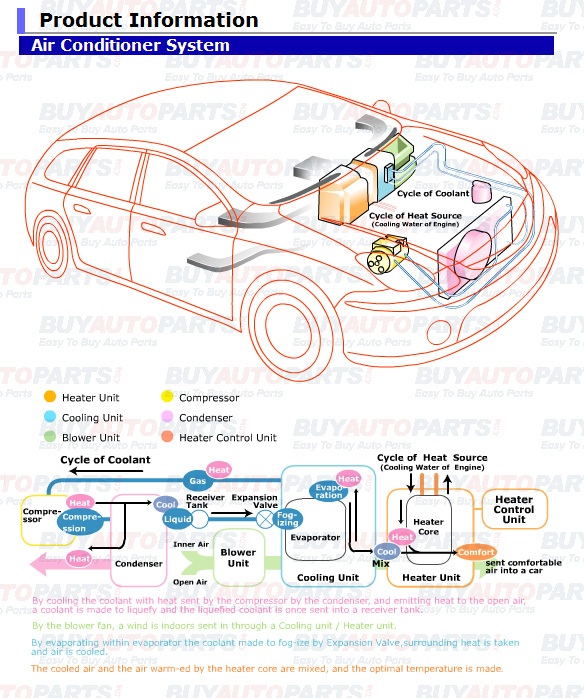
First up, we have the compressor. Think of this guy as the muscle-bound bouncer of your AC system. His job? To grab the refrigerant – that magical fluid we mentioned, which is a gas at this point – and really, really squeeze it. When you compress a gas, two things happen: it gets hot, and its pressure goes way up. Imagine trying to cram all your holiday shopping into one tiny suitcase – it’s a tight, warm fit! So, now we have a super-hot, high-pressure gas.
Letting Off Steam: The Condenser
That super-hot, high-pressure gas needs to cool down. That's where the condenser comes in. You know that grille at the front of your car, right near the radiator? The condenser is usually tucked in there. Its job is to get rid of all that heat. As the hot gas flows through its coils, the air rushing over it (when you’re driving or thanks to a fan) cools it down. It's like when you've been running and you're radiating heat, but then a breeze hits you. As the gas cools, it changes phase and turns back into a high-pressure liquid. Think of it as liquid gold for coolness!
The Big Reveal: The Expansion Valve (or Orifice Tube)
Now we have this high-pressure, slightly cooled liquid refrigerant. It's still under a lot of stress. It needs to chill out, literally. So, it passes through a tiny, tiny opening called an expansion valve (or sometimes an orifice tube, depending on your car). This is like opening a can of soda. Remember that satisfying "psssst" sound? And how the can feels instantly colder? That’s because the sudden drop in pressure causes the liquid to rapidly expand and vaporize. And here’s the key: when it expands and vaporizes, it gets incredibly cold. It's like letting out a really big, relieved sigh, but a freezing one!
The Cold Heart: The Evaporator
This is where the actual cold air gets made for your car's cabin. That super-chilled, low-pressure liquid/gas mixture now flows into the evaporator. The evaporator is basically a set of coils, like a mini radiator, hidden behind your dashboard. Your car's fan blows the warm air from inside your car over these freezing cold coils. Because the coils are so cold, they absorb the heat from the air. This process makes the refrigerant turn back into a low-pressure gas, and the air that gets blown into your face is now gloriously, wonderfully cold!
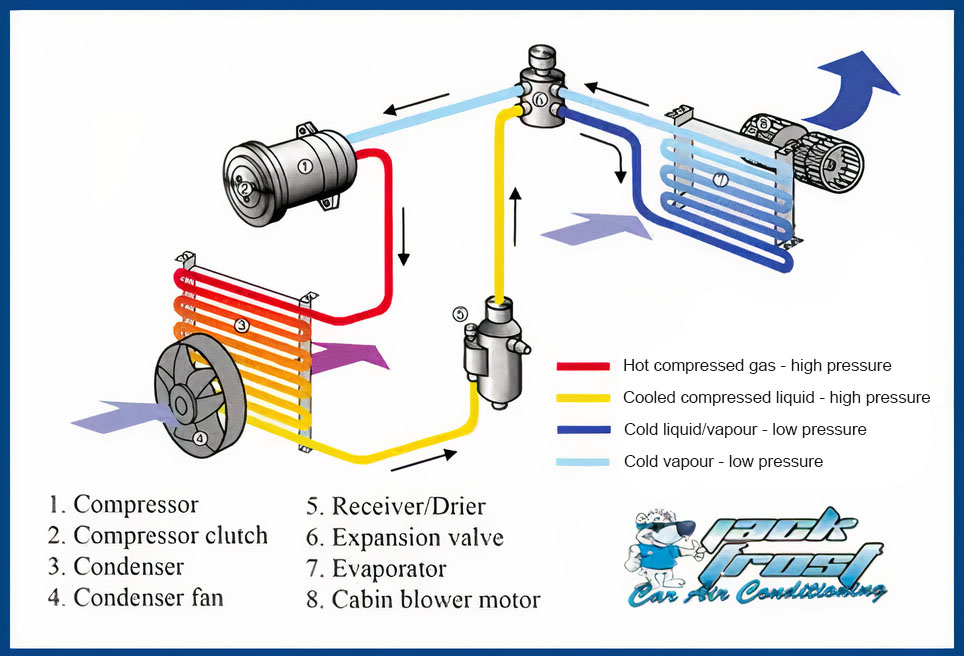
The cold air goes into your cabin, and the now gaseous refrigerant, having absorbed heat, heads back to the compressor to start the whole cycle again. It’s a continuous loop, a refrigerant roller coaster, all designed to make sure you don't melt into your seat.
It's All About Heat Transfer, Baby!
So, the next time you're sweating bullets, then hit that AC button and feel that sweet, sweet arctic blast, give a little nod to the clever engineering at play. Your car isn't making cold air out of nothing; it's simply taking the heat from inside your car and moving it outside. It’s a brilliant way to make a sweltering drive tolerable, turning your fiery chariot into a cool, calm oasis. And that, my friends, is truly something to smile about!

