Alright, let’s talk nylon. You know it. You wear it. You probably brush your teeth with it (well, the bristles, anyway!). It's in your gym shorts, your sturdy backpack, those incredibly smooth tights that somehow resist most (but not all!) snags, and even your trusty umbrella. It’s everywhere, doing its silent, strong, and often stretchy thing. But have you ever paused mid-stretch or mid-jog and thought, "What on earth is this stuff actually made of?"
Most of us, if we stop to think about it at all, probably just shrug and assume it’s… well, something plastic-y. And you’d be right, kind of! But it's not like they're grinding up old milk jugs and spinning them into your snazzy activewear. Oh no, the origin story of nylon is a little more like a mad scientist’s kitchen experiment, but in the best possible way.
It’s Not From a Plant, Nor a Fluffy Sheep!
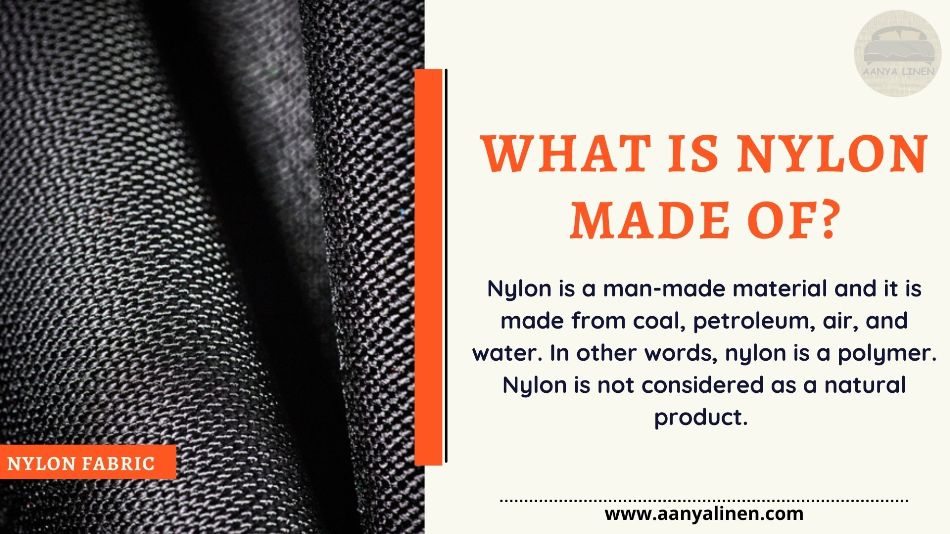
First things first, let's clear the air. Nylon isn't grown. You won't find nylon trees swaying in the breeze or nylon sheep roaming picturesque pastures (though a sheep wearing a nylon sweater would be quite the sight!). It’s 100% synthetic, baby. This means humans invented it in a lab, cooked it up, and molded it into the useful material we know today. Think less "Mother Nature" and more "brilliant chemists with big ideas."
The Secret Ingredients: Tiny Building Blocks
So, if it's not from nature, what's its secret recipe? Well, it all starts with some pretty humble beginnings: a couple of chemicals called diamines and diacids. Now, don't let those fancy names scare you. Think of them as tiny, eager-to-party building blocks, like individual LEGO bricks just waiting to be snapped together.
Where do these chemical LEGOs come from? Mostly from petroleum – yep, good old oil and natural gas. So, in a roundabout way, that fossil fuel you hear so much about is also the great-grandparent of your favorite hiking socks. Who knew?

The Big Chemical Cook-Up: Making Long Chains
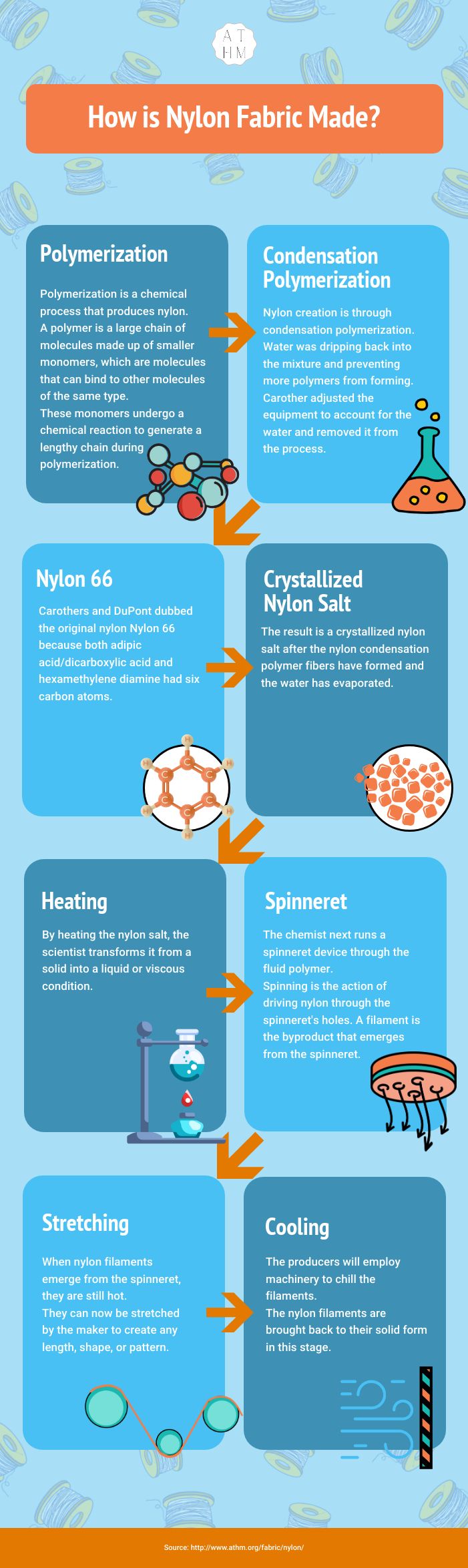
Once you've got your diamines and diacids ready, the real magic happens. Imagine a giant, industrial-sized kitchen where these tiny chemical bricks are brought together. They're heated up, stirred, and encouraged to link arms and form incredibly long, super-strong chains. This linking process is called polymerization, and it’s the heart of what makes nylon, well, nylon.
Think of it like stringing beads onto an impossibly long necklace, or linking thousands of paperclips together. Each diamine brick connects to a diacid brick, and then another diamine, and another diacid, over and over again. The result? A super-long, continuous strand of what we call a polymer – a giant molecule made of many repeating smaller units.
At this stage, you've got a gooey, molten substance. Not exactly fashion-forward yet, right? This is where the spaghetti-making machine comes in! (Not really, but bear with me).
From Gooey Blob to Super-Strong Threads
This molten nylon goo is then pushed through tiny, tiny holes, sort of like squeezing toothpaste out of a tube, or how a pasta machine extrudes long strands of spaghetti. These emerging strands are called filaments. They’re still a bit weak at this point, like a wet noodle.
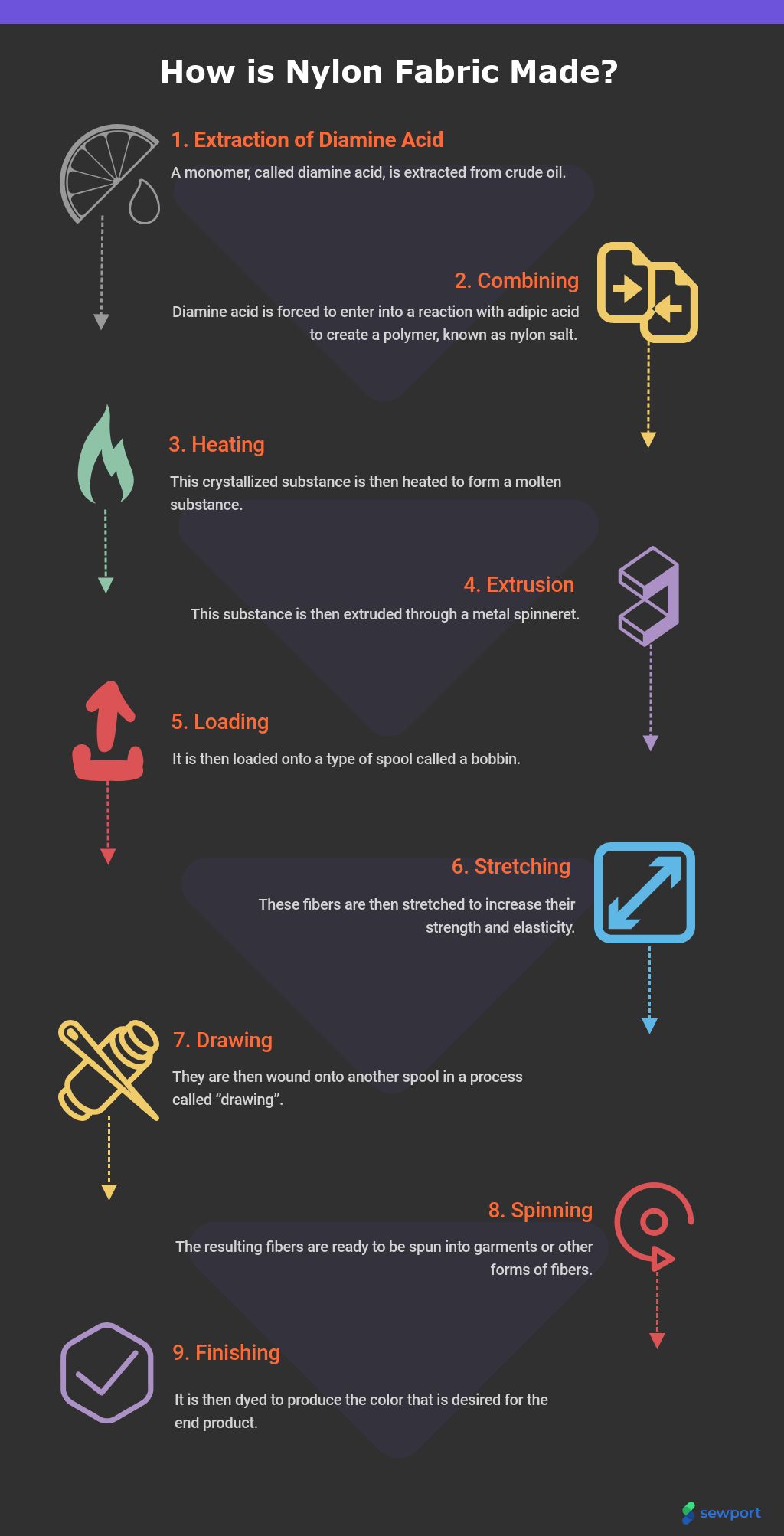
But here's a crucial step: they get stretched! A lot. Imagine pulling a piece of taffy or stretching a rubber band. This stretching (or "drawing," as the pros call it) aligns all those long polymer chains, making them lie parallel to each other. This alignment is what gives nylon its incredible strength and elasticity. It's like turning a messy pile of ropes into a tightly braided super-cable.
Why We Love This Lab-Made Wonder
And voilà! From petroleum-derived chemicals, through a bit of heat, stirring, and stretching, we get nylon. This ingenious process gives us a material that's:
- Super strong: Can withstand a lot of tugging and pulling.
- Durable: Resists wear and tear, making your backpack last ages.
- Elastic: Stretches and snaps back, perfect for those yoga poses.
- Water-resistant: Great for rain gear and tents.
- Lightweight: You barely notice it's there.
So, the next time you slip on those sleek running tights, marvel at your unbreakable toothbrush bristles, or pull out a tent that survived an unexpected downpour, spare a little appreciative thought for those clever chemists. They took some basic chemicals, played a bit of molecular LEGOs, and gave us one of the most versatile and durable materials in our everyday lives. Pretty cool for something that started as a petroleum product, right?
