Alright, let's chat about something that sounds super technical but is actually just your welder's way of saying, "Hey, I need a little break!" We're talking about Duty Cycle, and trust me, it's not as scary as it sounds. Think of it less like a stern instruction manual and more like a friendly reminder from your trusty welding machine.
Imagine you're having a particularly energetic day. Maybe you're moving furniture, or chasing after a toddler, or just really getting into that garden project. You work hard, you sweat a little, and then what? You probably grab a glass of water, sit down for a minute, catch your breath. Your welder, believe it or not, is a lot like you! It works hard, generates a lot of heat, and then needs to chill out for a bit. That's where duty cycle comes in.
So, What Exactly Is This "Duty Cycle" Thing?
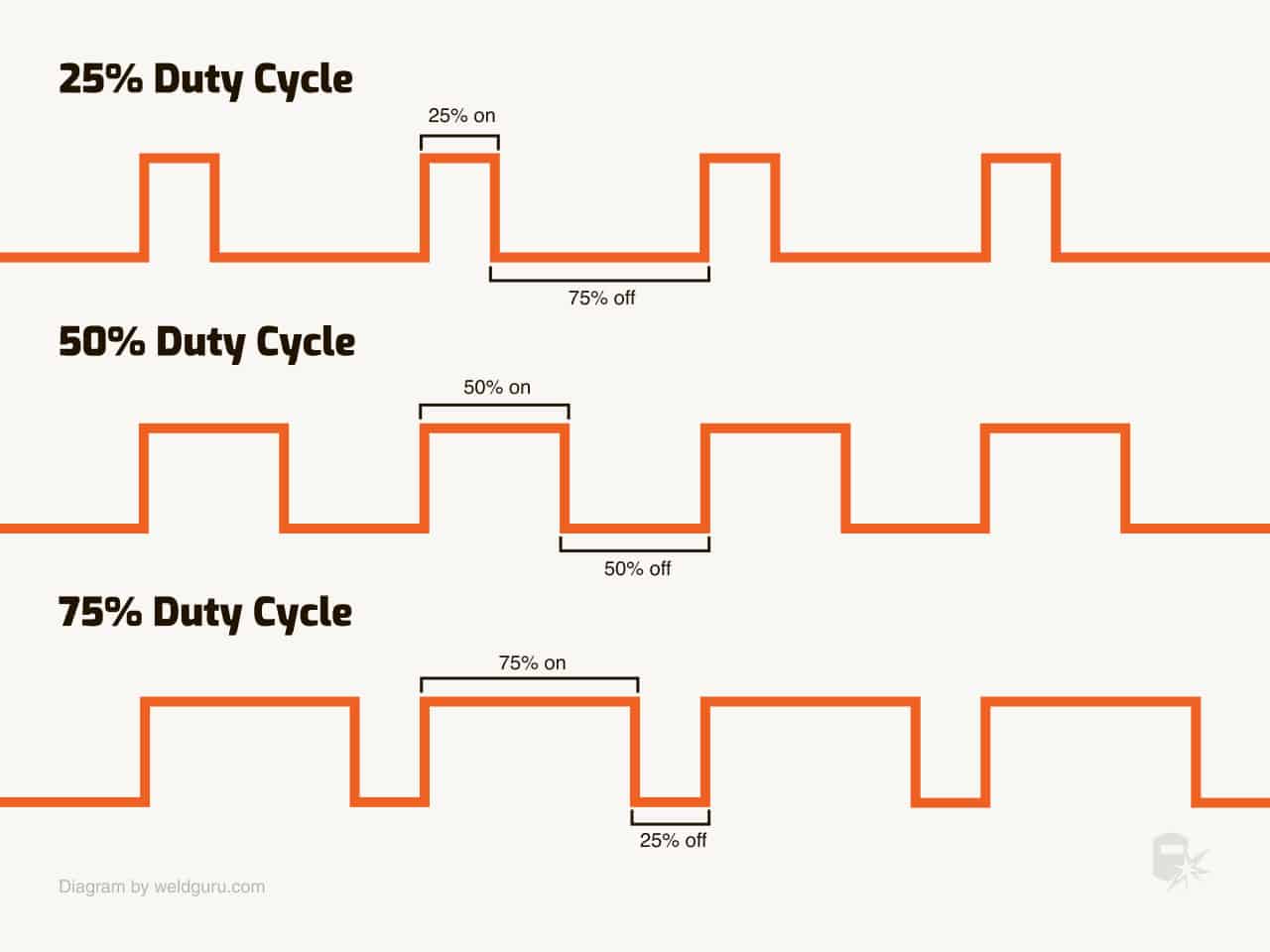
In the simplest terms, the duty cycle tells you how long your welder can actively weld within a 10-minute period before it needs to take a breather to cool down. It’s always expressed as a percentage. For example:
- If your welder has a 60% duty cycle at a certain amperage, it means you can weld for 6 minutes out of every 10 minutes. The remaining 4 minutes are its cool-down time.
- A 30% duty cycle? That’s 3 minutes of welding, followed by 7 minutes of rest.
It’s a bit like your old coffee maker. You can brew a pot, but if you immediately try to brew another, the machine might struggle or the coffee might not be as good. It needs a moment to reset, right? Or think about your phone after an intense gaming session – it gets warm, sometimes even hot, and might slow down until it cools off. Your welder is doing the same thing!
Why Should You Even Care About It? (The Fun Part!)
Okay, so it takes a break. Big deal, right? Well, actually, it’s a pretty big deal for a few super important reasons that benefit you and your welding adventures:
1. It's About Keeping Your Welder Happy (and Safe!)
Pushing your welder past its duty cycle is like forcing a sprinter to run a marathon without any water breaks. They'll eventually collapse! Your welder won't literally collapse, but it will overheat. Most modern welders have a thermal overload protection feature – a fancy way of saying it will automatically shut itself off. This is a good thing! It saves the internal components from frying. But wouldn't you rather avoid those annoying, momentum-killing shutdowns?
Ignoring the duty cycle can lead to serious internal damage over time, potentially shortening your welder's lifespan or even leading to costly repairs. We want our tools to last, don't we? Treating your welder well means it’ll be there for all your future projects, ready to spark up when you are.
2. Quality Welds (No More "Oops" Moments!)
An overheated machine isn't a happy machine, and an unhappy machine doesn't always produce its best work. When your welder is running too hot, its performance can become inconsistent. This might lead to weaker welds, porosity (little holes in your weld bead), or just generally ugly results that make you frown instead of beam with pride. Taking those recommended breaks helps ensure your machine maintains stable output, giving you beautiful, strong welds every time. Think of it like a baker needing their oven at a consistent temperature for perfect cookies – no one wants burnt edges and gooey centers!
3. Surprisingly, It Can Make You More Productive!
This sounds counterintuitive, right? Taking breaks makes you more productive? Yes! If you push your welder too hard and it shuts down, you're forced to wait for it to cool before you can start again. These forced shutdowns often last longer than a planned cool-down period. If you integrate short, regular breaks into your workflow – say, use those 4 minutes to clean your previous weld, grab a drink, or just admire your handiwork – you’ll actually get more done overall. It’s the old Tortoise and the Hare story: slow and steady (with proper breaks!) wins the welding race.
A Little Secret: It Changes with Amperage!
Here’s a fun twist: the duty cycle isn't a static number. It usually changes depending on the amperage you’re welding at. You'll typically see the duty cycle listed for your machine at its maximum rated output. But here’s the rule of thumb:
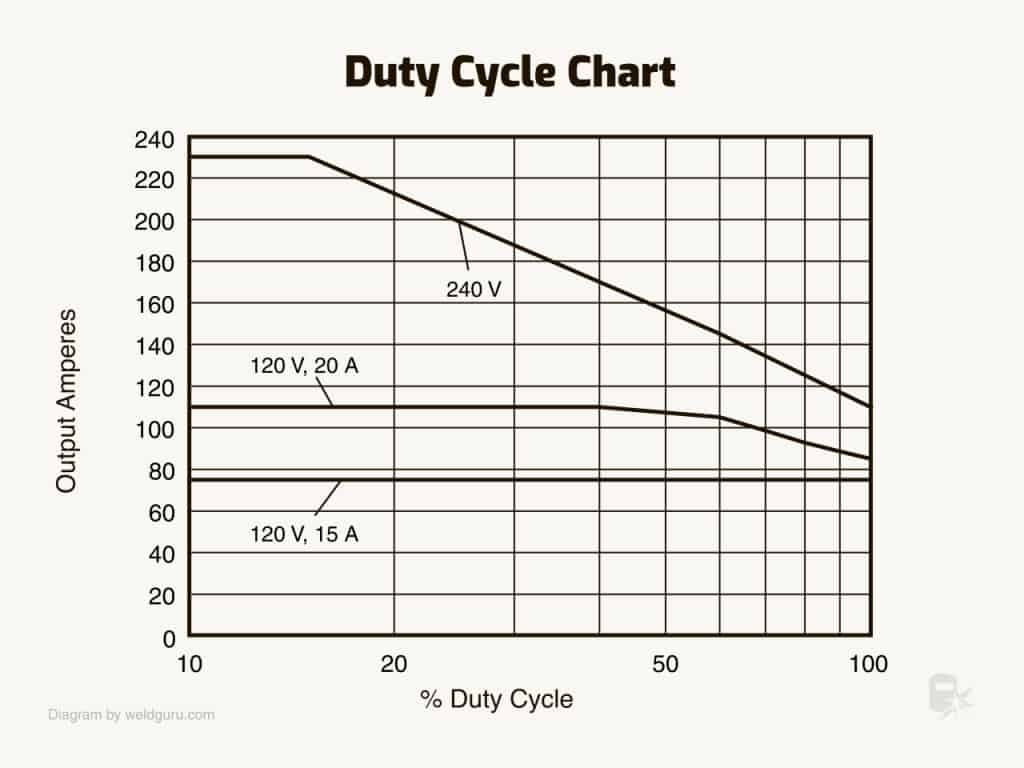
- The higher the amperage you’re using, the lower your duty cycle will be. (More heat, more rest needed!)
- The lower the amperage, the higher your duty cycle will be. (Less heat, can work longer!)
Think of it like sprinting versus jogging. You can sprint at full speed for a short burst (high amps, low duty cycle), but you can jog at a comfortable pace for a much longer time (lower amps, higher duty cycle). Makes sense, right?
Finding Your Welder's "Personality" (Duty Cycle)
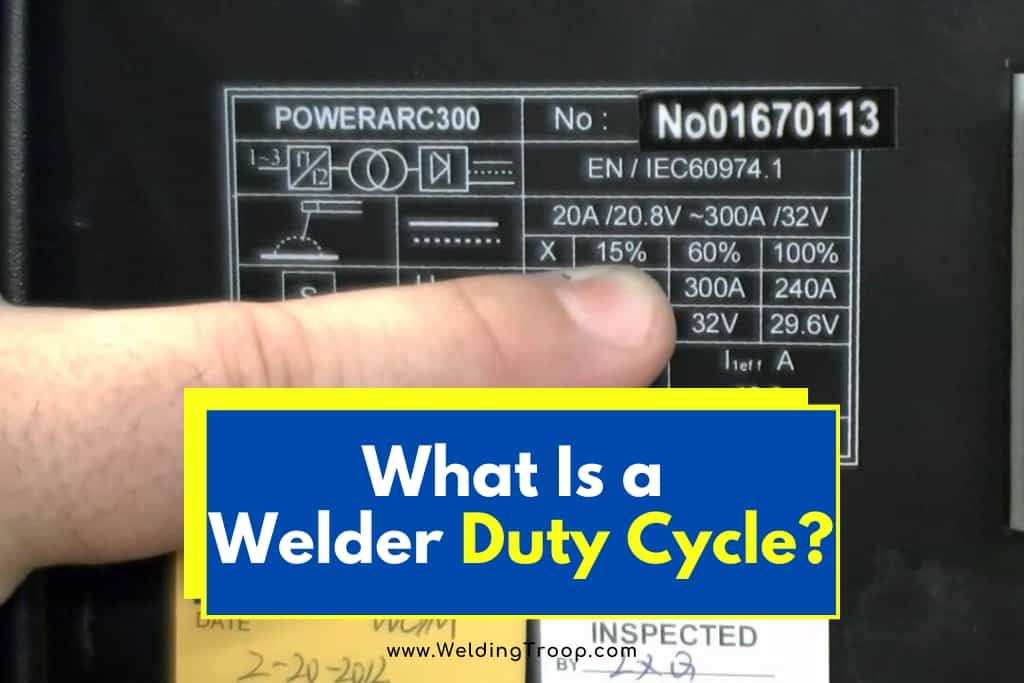
So, where do you find this crucial information? Look on the machine itself! There's usually a label with all sorts of technical specs, and the duty cycle will be proudly displayed there, often alongside the amperage it applies to. If not on the machine, your trusty owner's manual will have all the details. Don't be afraid to consult it! It’s like reading the care instructions for your favorite shirt – a little knowledge goes a long way in making things last.

Putting It Into Practice: Real-Life Scenarios
Most folks doing small projects around the house – say, fixing a garden gate or welding a small art piece – might never even hit their welder's duty cycle. You're naturally stopping to adjust your work, grab another piece of metal, or just think about your next step. Those natural pauses are often enough to let your machine cool down. Mr. Henderson down the street, tacking a tiny repair on his BBQ smoker, is probably barely breaking a sweat (his welder's sweat, that is!).
But if you're building something bigger, like a workbench or a small trailer, and you're laying down long, continuous beads, then you'll definitely want to be mindful. Plan your work! Weld a section, then take a deliberate break to brush your welds, grab a cold drink, or maybe just stretch your back. It’s a great excuse for a mini-break, and your welder will thank you for it!
In a nutshell, duty cycle isn't a complex math problem or a barrier to your creativity. It's simply your welder's way of telling you, "I work hard for you, please let me take a breather!" Understanding and respecting it means a longer life for your machine, better quality welds, and a more enjoyable, less frustrating welding experience for you. Happy welding, and remember to let your tools (and yourself!) take a well-deserved break!