Ever paused to wonder what gives your favorite plastic water bottle its sturdy shape, or why rubber bands stretch with such joyful elasticity? You're actually pondering the magic of polymers! Don't let the scientific-sounding name intimidate you; learning about polymers is like getting a backstage pass to understanding so many things in our everyday world. They are the unseen heroes in countless objects, making chemistry not just relevant, but genuinely fun and surprising.
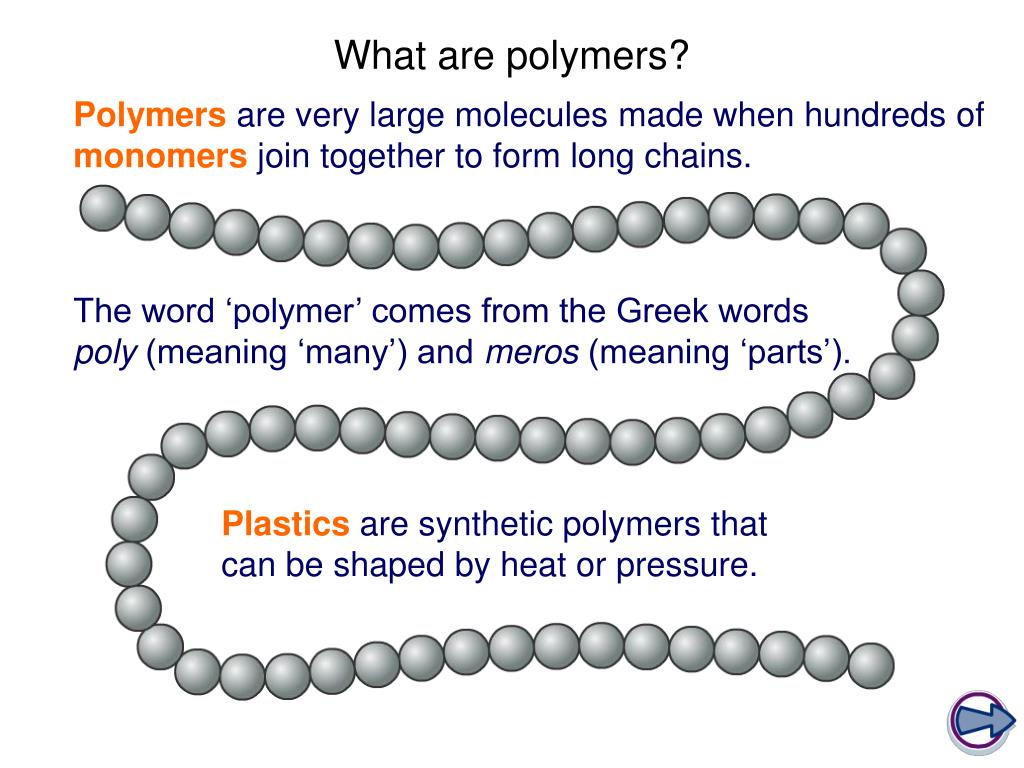
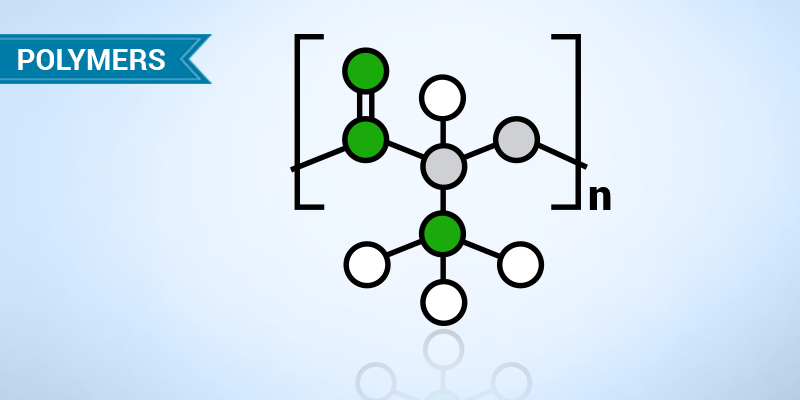
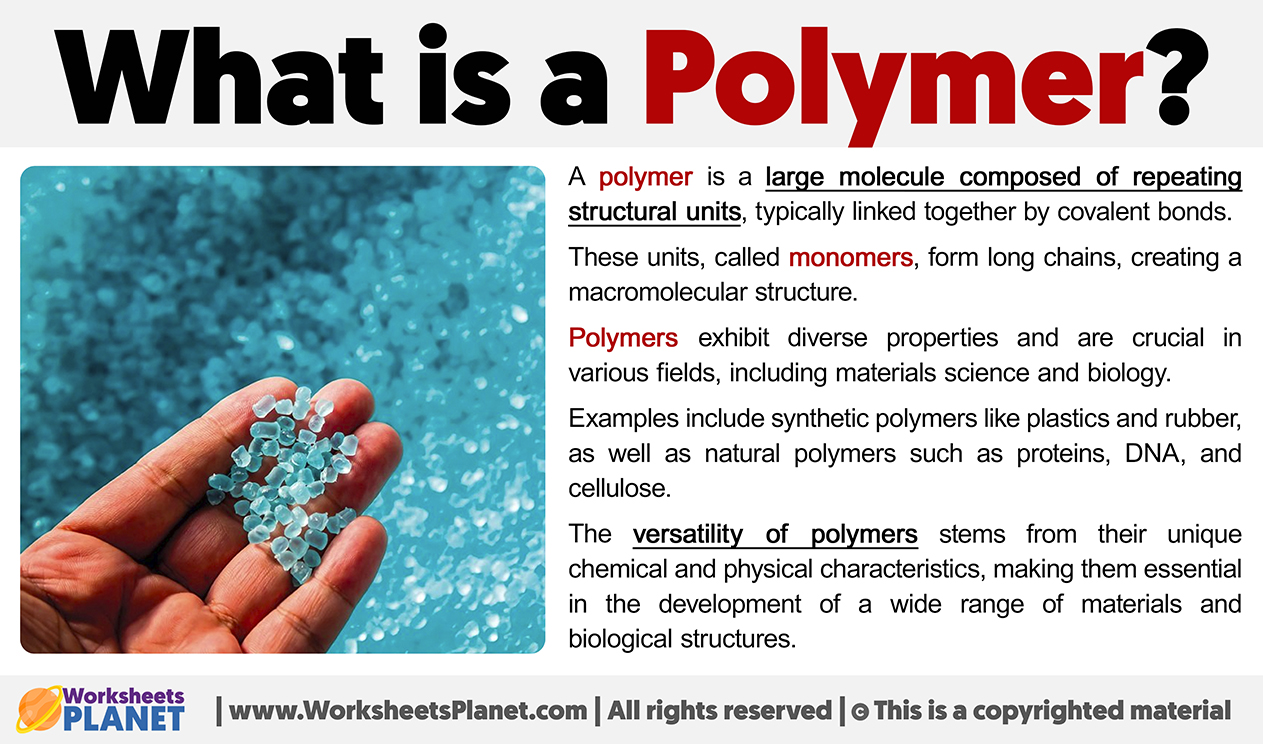
So, what exactly is a polymer? Imagine a tiny, individual bead. Now imagine linking thousands, or even millions, of these beads together into a super long, intricate chain. That chain is a polymer, and each individual bead is called a monomer. The purpose and benefit of these molecular chains are immense: by varying the type of "beads" and how they're linked, scientists can design materials with incredible properties. They can be incredibly strong, remarkably flexible, excellent insulators, or even highly adhesive. This versatility means polymers are tailor-made to solve specific challenges, offering solutions that traditional materials often can't.
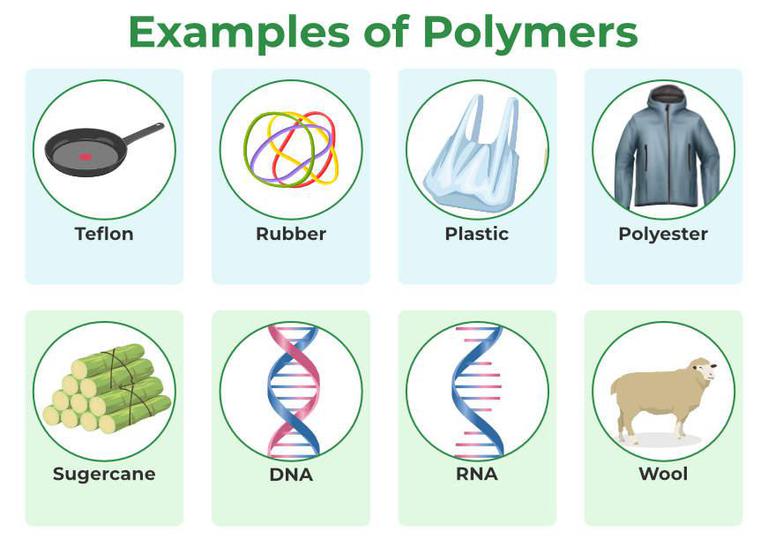
You interact with polymers constantly, often without even realizing it! In the realm of education, understanding polymers helps us grasp fundamental biological processes: your very own DNA, the blueprint of life, is a complex biopolymer. So are the proteins that build your muscles and enzymes. In daily life, the examples are endless. Think about the natural world: the cellulose that gives wood its strength and forms the fibers of your cotton t-shirt is a polymer. The rubber in your car tires or bouncy balls is another fantastic natural polymer. Then there are the synthetic wonders: nearly every plastic item you touch – from the polyethylene of your milk jug to the PVC of your window frames or the nylon in your backpack – is a man-made polymer. Even the sticky part of super glue is a type of polymer designed to form strong, fast bonds!
Curious to explore polymers further? You don't need a lab coat! Start by simply looking around your home. Pick up a plastic container and check the recycling symbol; the abbreviations like "PET" (polyethylene terephthalate) or "HDPE" (high-density polyethylene) are clues to the polymers they contain. A simple and fun way to actively explore polymer creation is by making slime at home with PVA glue (polyvinyl alcohol) and borax solution – you'll witness the long polymer chains forming right before your eyes! Or, stretch a rubber band and marvel at the incredible elasticity its polymer chains provide. Even just reading the labels on new clothes or packaging can reveal fascinating insights into the world of "polyester," "spandex," or "silicone." Polymers are everywhere, constantly evolving, and a little curiosity can open up a whole new appreciation for the materials that build our modern world.