Have you ever been on a road trip, cruising along, when suddenly a field of majestic giants appears on the horizon? We're talking about wind turbines, those elegant structures with their long blades gracefully slicing through the air. They’re becoming an increasingly common sight, and it’s pretty fascinating to stop and wonder: what’s the deal with these things? Learning about them isn’t just for engineers; it’s a wonderful way to understand a big part of our planet's future energy landscape, and frankly, it's just plain cool to grasp how we harness the invisible power of the wind!
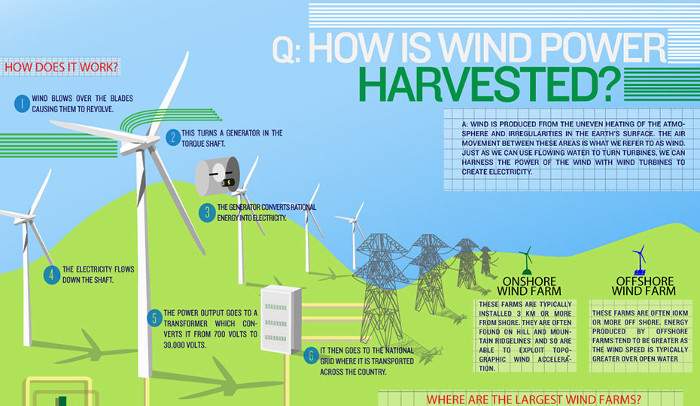
At their core, wind turbines have one primary purpose: to capture the kinetic energy of the wind and convert it into electricity. Think of it like a sophisticated pinwheel connected to a generator. The wind pushes the blades, which spin a shaft inside the nacelle (the boxy part at the top), and that motion powers a generator to produce clean, usable electricity. The main benefit here is obvious: it’s a renewable source of energy. Unlike burning fossil fuels, which release greenhouse gases and are finite, wind is plentiful and, well, it just keeps blowing! This means less air pollution and a smaller carbon footprint, helping us combat climate change.
We see wind turbines at work in our daily lives without even realizing it. They're silently powering homes, schools, and businesses across entire regions. Next time you flip a light switch, there's a growing chance some of that power came from a nearby wind farm! In an educational context, wind turbines are a fantastic teaching tool. Kids can build miniature versions in science class, learning about aerodynamics and electricity generation firsthand. For adults, visiting an actual wind farm (if accessible) or even just looking up how your local grid gets its power can be an incredibly insightful exercise. They're not just abstract concepts; they're very real, tangible sources of power.
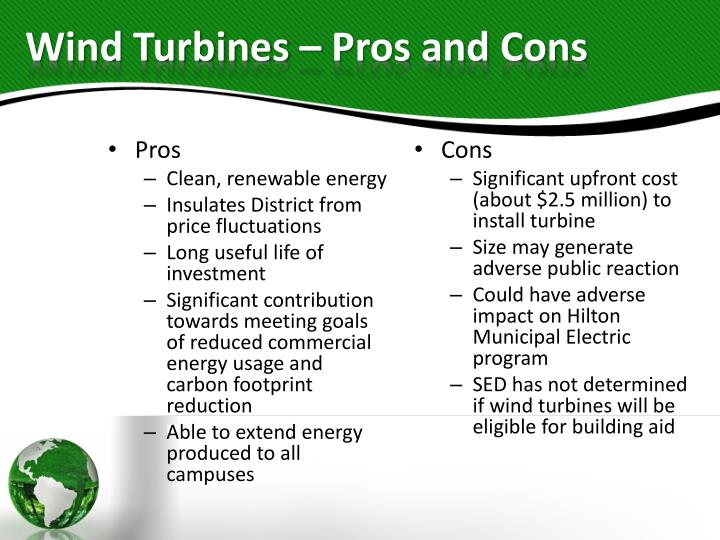
But like most things that sound almost too good to be true, wind turbines come with their own set of considerations, or "cons." One of the biggest challenges is their intermittency. The wind doesn't always blow, and sometimes it blows too hard! This means wind power needs to be balanced with other energy sources or paired with efficient energy storage solutions like batteries. There's also the visual aspect; some people find large wind farms to be an eyesore, impacting natural landscapes. And while modern designs are quieter than older models, there can still be some low-frequency noise pollution for those living very close by.

Another point of discussion often revolves around wildlife. Birds and bats, unfortunately, can sometimes collide with the spinning blades, though ongoing research and technology are constantly developing ways to mitigate this, such as improved siting and radar-activated shutdown systems. Lastly, the initial cost of building a wind farm can be substantial, and the manufacturing process for the blades and towers requires resources and energy, even if the operational phase is clean. Large land areas are also needed for onshore wind farms, which can sometimes compete with other land uses.
So, how can you explore this fascinating topic more? A simple way is to search online for "wind energy facts" or "how do wind turbines work." You might be surprised by the sheer innovation happening in this field, from massive offshore wind farms to new turbine designs. Consider watching a documentary about renewable energy, or if you live near one, see if there are any public tours of a wind farm. Even just having a curious conversation with friends or family about where our energy comes from can open up a whole new world of understanding. It’s a complex but incredibly important conversation, and the more we know, the better we can navigate our energy future!