:max_bytes(150000):strip_icc()/how-to-thaw-a-frozen-water-pipe-2124986_FINAL-edit-01-6ff53ed13c7e41559df7070680efe4a6.jpg)
Ever woken up on a chilly morning, groggy and reaching for that first cup of coffee, only to find... nothing? Or maybe you step into the shower, ready for a warm cascade, and are greeted by a sad, sputtering gasp? Yep, your water pipes might be frozen solid. It’s a moment that can make your heart do a little plummet, but hang on a sec! Instead of panicking, let's lean into the sheer curiosity of it all. What's actually happening here, and why is it so fascinating?
The Great Freeze: A Liquid's Rebellion
Think about it: water, this incredible substance we depend on for everything, has a bit of a rebellious streak. Most liquids, when they get cold enough to turn solid, actually contract. They shrink. But not our trusty H2O! Water, when it freezes, actually expands. It gets bigger. Imagine a tiny, invisible superhero flexing its muscles, taking up more space than it usually does. This expansion is why frozen pipes can become a real headache, sometimes leading to a burst – not just a simple blockage.
It's a marvel of physics happening right inside your walls! That little bit of frozen water becomes a tiny, unstoppable force, pushing outwards against the unyielding metal or plastic of your pipes. Pretty wild, right?
"Okay, Cool, But I Still Have No Water!"
Right, fair enough! While we appreciate water's unique properties, we also want our morning coffee. So, what do you actually do when your liquid lifeline turns to ice? First things first: don't panic. A frozen pipe isn't necessarily a burst pipe, especially if you act gently and quickly.
Your detective work begins now! Start by identifying the scope of the problem. Is it just one faucet that's silent? Or is every tap in the house giving you the cold shoulder? If it’s just one, the freeze is likely close to that specific outlet. If it’s widespread, you might have a frozen main line or a problem closer to where water enters your home.
One pro tip: Go ahead and open the affected faucets (even if just a tiny bit). Why? Because as the ice melts, even slowly, water needs a place to escape. This also helps relieve any pressure building up behind the blockage, which is your best defense against a burst pipe.
Gentle Thawing: The Spa Treatment for Your Pipes
Now for the careful warming. The goal here is gentle encouragement, not brute force. Think of it like coaxing a shy animal out of hiding, rather than blasting it with a firehose.
- Locate the Freeze: Frozen pipes often hide in vulnerable spots: near exterior walls, in unheated crawl spaces, basements, or garages. Any pipe that’s exposed to cold air is a prime suspect.
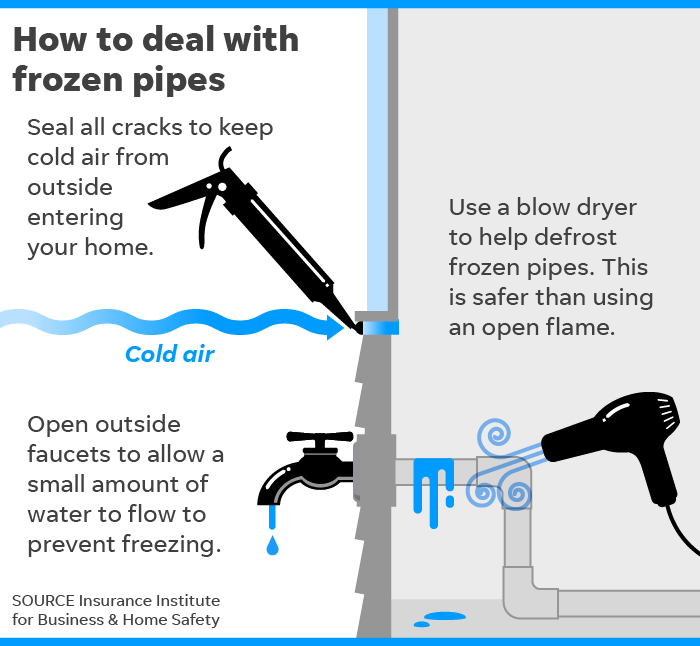
- Apply Warmth: Once you've found a likely suspect, it's time for some warmth. A hairdryer on a low setting is your best friend here. Move it back and forth along the pipe, never holding it in one spot for too long. This is a gentle warm-up, not a blast furnace!
- Other Options: Hot towels wrapped around the pipe, a heat lamp positioned safely away, or even a portable space heater (again, safely positioned and supervised) can work wonders.
What to absolutely AVOID: Any kind of open flame! Blowtorches, propane heaters, or anything that could scorch or damage your pipes (or worse, start a fire) are a big no-no. We're aiming for a warm hug, not a fiery embrace.
Keep those faucets open slightly. You'll know you've succeeded when a trickle starts, eventually turning into a steady flow. Success! Give yourself a pat on the back for your patience and scientific prowess.

The Preventative Dance: Keeping the Ice Monster Away
So, now that you're a pipe-thawing expert, how do you prevent a repeat performance? It's all about thinking ahead, like a savvy squirrel storing nuts for winter.
- The Drip-Drop Strategy: On truly frigid nights, let a few faucets (especially those on exterior walls) drip slowly. Moving water is much harder to freeze than still water. It’s like a tiny, continuous waterfall telling the ice monster, "Not today, buddy!"
- Open Those Cabinets: For pipes under sinks against exterior walls, open the cabinet doors. This allows warmer indoor air to circulate around them.
- Insulate! Pipe insulation sleeves are cheap and easy to install. Think of them as cozy little sweaters for your pipes.
- Outdoor Taps: Disconnect all garden hoses and drain outdoor faucets. If you have an outdoor shut-off valve, use it!
When to Call in the Pros
Sometimes, despite your best efforts, the ice monster wins. If you can't locate the freeze, if multiple main lines are frozen, or – the dreaded scenario – if you suspect a pipe has burst (listen for hissing, gurgling, or see visible water damage), it's time to call a qualified plumber. They have specialized equipment to pinpoint the freeze and thaw it safely, or repair any damage.
So, the next time your water decides to take a solid holiday, don't just see a problem. See a fascinating display of physics, a puzzle to solve, and an opportunity to become a temporary pipe whisperer. It's all part of the wonderfully curious world we live in!
:max_bytes(150000):strip_icc()/how-to-tell-if-your-pipes-are-frozen-2124985-v3-5b476dd246e0fb005b2575e8-f000053e481448d6b246a22658def1cc.png)