
Hey there, electrical adventurers! Ever wonder why your super-fancy coffee maker suddenly decides to go on strike, plunging your kitchen into darkness just as you’re about to achieve caffeine nirvana? Or why that epic hair dryer battle leaves you with a tripped breaker instead of fabulous locks? Chances are, you’ve stumbled upon the mysterious world of circuit breakers and their limits. Specifically, we're going to demystify the maximum watts on a 20 amp circuit, because understanding it is like having a secret superpower for your home!
Think of your home's electrical system like a super-highway. The electricity flows along, powering all your cool gadgets. Each circuit is like a lane on this highway, and each lane has a speed limit and a weight limit. Our focus today is on the common 20-amp circuit, which is often found in kitchens, bathrooms, and laundry rooms – basically, where the heavy-hitters live! So, grab a snack (maybe not one that needs to be plugged in right now), and let’s dive in!
The Magic Formula: Watts, Amps, and Volts!
Before we get to the big number, let's quickly chat about the three musketeers of electricity: Volts, Amps, and Watts. Don't worry, it's not going to be a pop quiz!
-
Volts (V): Think of volts as the "pressure" or "push" of the electricity. In most North American homes, standard outlets run on 120 volts. Easy peasy!
-
Amps (A): Amps are like the "flow rate" or "current" of electricity. A 20-amp circuit means that's the maximum flow rate it's designed to safely handle before things get dicey.
-
Watts (W): Watts are the "power" or "work" being done. It's how much energy your appliance is actually using. This is the star of our show!
And here's the super-simple formula that ties them all together:
Watts = Volts × Amps

See? No scary calculus involved! It’s like baking a cake, but with electrons.
So, What's the Grand Total?
Alright, let’s plug in our numbers for a 20-amp circuit. Assuming you're in a standard North American home with 120-volt outlets:
120 Volts × 20 Amps = 2400 Watts
Boom! There it is! In a perfect, theoretical world, your 20-amp circuit could handle up to 2400 watts. That's a pretty respectable amount of power, right? Enough for quite a few gadgets!
But wait, before you go plugging in everything you own and throwing a house party of appliances, there's a tiny, crucial catch. It’s like when the recipe says "serves 8," but you know your hungry teenagers could probably polish it off in two servings. 😉
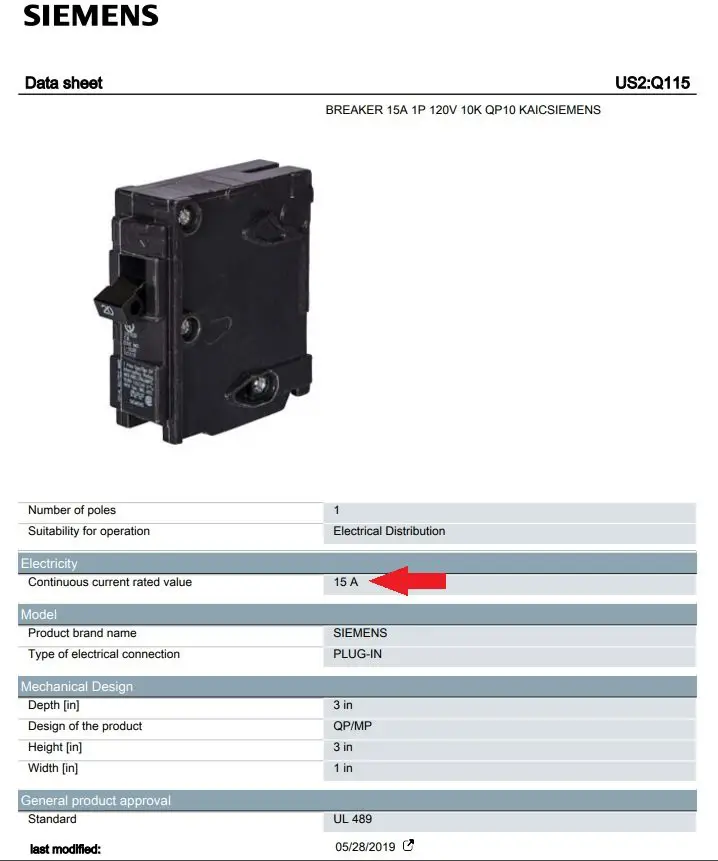
The 80% Rule: Your Circuit's Best Friend
Electricians and safety experts are a cautious bunch, and for good reason! They follow something called the 80% rule. This rule says that for continuous loads (things that are plugged in and running for three hours or more, like an electric heater or a microwave cooking a giant turkey), you should only load a circuit up to 80% of its maximum capacity.
Why? Well, running a circuit at its absolute maximum for extended periods can generate heat, potentially leading to wear and tear on your wiring or even, yikes, a fire hazard. Think of it like driving your car at its top speed constantly – it's just not ideal for the engine or its longevity!
So, let's apply the 80% rule to our 2400 watts:
2400 Watts × 0.80 = 1920 Watts
Ah, there’s the sweet spot! For continuous, safe operation, it's best to keep the total wattage on a 20-amp circuit to around 1920 watts. This gives you a nice, comfortable safety margin, ensuring your wiring stays cool and your breakers stay happy (and untripped!).
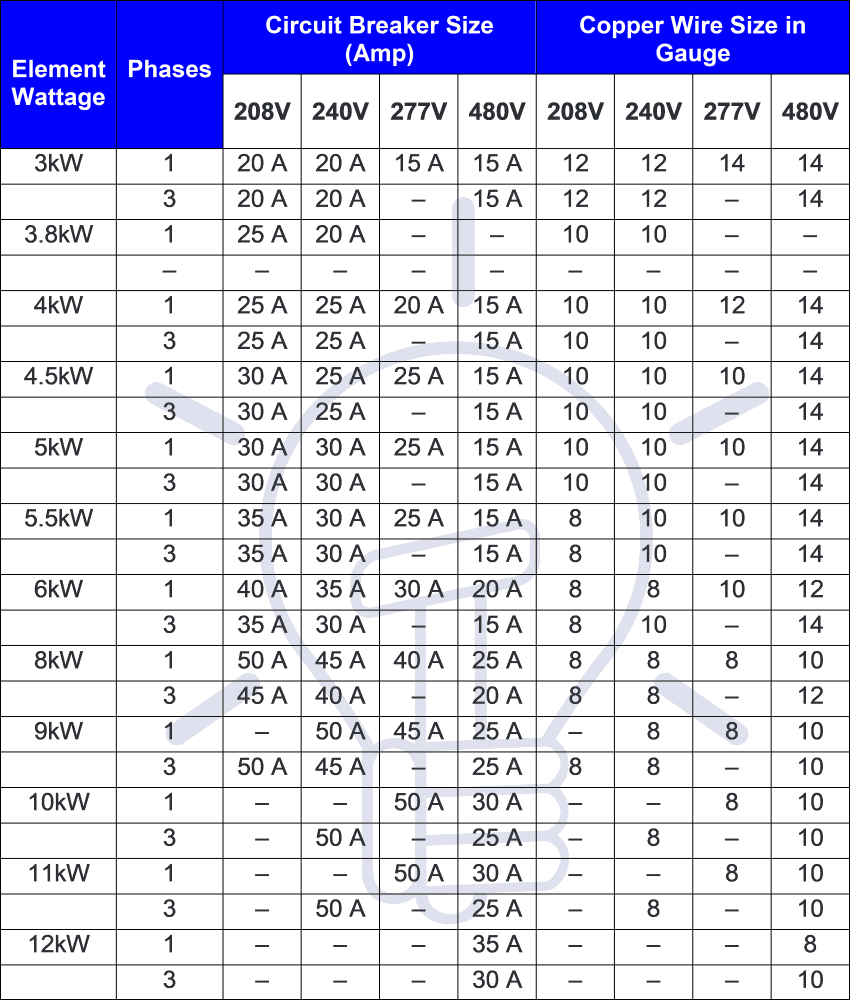
Real-World Scenarios: What Can You Run?
So, what does 1920 watts look like in appliance terms? Let’s imagine your morning routine:
-
Toaster: Around 800-1500 watts (whew!)
-
Coffee Maker: Roughly 800-1000 watts
-
Microwave: Often 600-1200 watts
-
Hair Dryer: Can be a hefty 1200-1875 watts (the true circuit buster!)

How Many Watts on a 20 Amp Circuit Breaker? - TONGOU
See how quickly those numbers add up? If you try to run a high-wattage hair dryer (1800W) and a powerful toaster (1500W) on the same 20-amp circuit at the same time, you're looking at 3300 watts! That's well over your 1920-watt safe limit (and even your 2400-watt absolute max!). Ding! There goes the breaker, saving your bacon (and your wiring!).
This is why kitchens often have multiple 20-amp circuits, or dedicated circuits for high-demand appliances like dishwashers. It’s all about spreading the electrical love!
Why Should You Care? (Besides Avoiding Darkness)
Knowing this isn't just about preventing momentary blackouts; it's about safety. Overloading circuits isn't just an inconvenience; it can be dangerous. Continuously tripping breakers is a sign that your circuit is being pushed too hard. Ignoring it can lead to overheated wiring, damaged outlets, and in severe cases, electrical fires. Nobody wants that!
So, take a peek at your appliances’ wattage (it's usually printed on a label on the bottom or back). Be mindful of what you're plugging into the same circuit. It’s like knowing how many people can safely fit in your car – you don’t want to be squished, and neither do your electrons!
Wrapping It Up With a Spark!
So, there you have it! Your 20-amp circuit can theoretically handle 2400 watts, but for smart, safe, and happy everyday living, aim for no more than 1920 watts for continuous use. You're now officially a circuit superhero, empowered with the knowledge to keep your home's electrical system humming along smoothly!
Understanding these simple numbers gives you control and peace of mind. No more mystery blackouts, no more appliance standoffs! Just smooth, flowing power for all your domestic adventures. Go forth and plug in wisely, my friend, and may your coffee always be hot and your hair always fabulous!