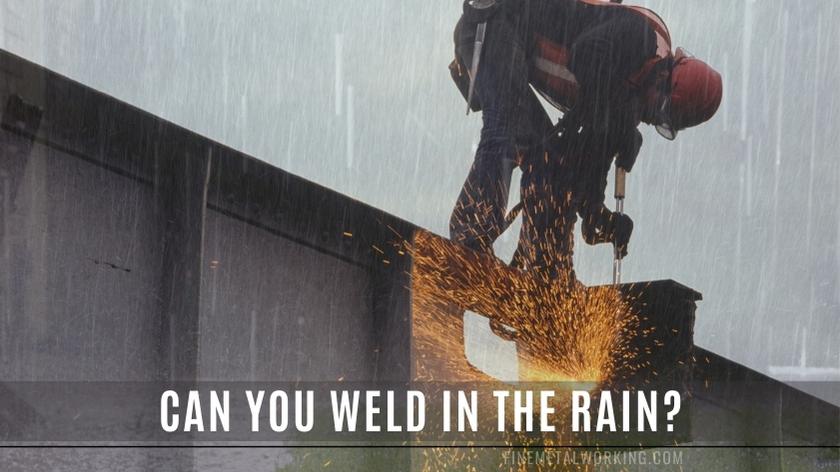
Picture this: You’ve got a project on the go, the sparks are ready to fly, and then… drip, drop. Rain. That familiar pitter-patter can instantly deflate your DIY dreams. The big question looms: Can you just power through and weld in the rain? It’s a classic conundrum for anyone who’s ever picked up a torch, and today, we're diving into whether it's a savvy move or a recipe for disaster.
Let's be real, nobody enjoys putting their plans on hold. But when it comes to welding and Mother Nature's watery embrace, safety should always, always be your co-pilot. While the image of a seasoned pro battling the elements might sound cinematic, the reality is far less glamorous and a lot more dangerous.
The Shocking Truth: Why Water and Electricity Don't Mix
At its core, welding is an electrical process. You're essentially creating a super-hot electrical arc to melt metal. And what’s one of the best conductors of electricity out there? You guessed it: water. Think about it – you wouldn't use a hairdryer in the bathtub, right? The same principle, albeit on a much larger and more powerful scale, applies here.
When you introduce water to a live welding circuit, you significantly increase the risk of an electric shock. Even a small puddle or damp ground can become a conductive pathway straight through you. We’re talking about hundreds of amps here, folks – not your average household current. A shock from welding equipment can be severe, potentially leading to cardiac arrest or other serious injuries. It’s not just a "tingle" you might get from static; it’s a life-threatening jolt.
Beyond the Zap: Other Rainy Day Risks
Electrocution is the big one, but it's not the only concern. Welding in the rain brings a whole host of other headaches:
- Poor Weld Quality: Water rapidly cools the molten metal, which can lead to brittle welds, porosity (tiny holes), and a generally weak bond. It's like trying to bake a perfect soufflé in a gusty wind – the results just won't be good.
- Steam and Pressure: When water hits that super-hot arc or molten puddle, it instantly turns into steam. In enclosed spaces or if water gets trapped (say, in a rusty joint), this rapid expansion can create significant pressure, leading to small, localized "explosions" of steam. It’s not Hollywood movie stuff, but it can cause spatter, make a mess, and obscure your vision.
- Reduced Visibility: Rain, mist, and fog inherently reduce your ability to see clearly. Precision is key in welding, and if you can't see your workpiece or your weld pool properly, you're not only risking a bad weld but also potential injury from misfires or accidental contact.
- Slippery Surfaces: This might seem minor, but slipping and falling while carrying heavy equipment or working around hot metal is a serious hazard. Good footing is crucial for stability and control, and even a damp floor can become a skate park.
So, What's a Dedicated Welder To Do?
The best advice is often the simplest: wait it out. Patience truly is a virtue in this scenario. If the rain is just a passing shower, grab a coffee, catch up on some tunes, or prep your next steps. Your project will still be there when the sun peeks out.
If waiting isn't an option, or your deadline is looming, consider relocating. Moving your project indoors or under a substantial, dry, well-ventilated shelter is the safest bet. Think garages, workshops, or sturdy carports. Just ensure there's proper airflow to disperse those welding fumes – safety first, always!
For those times when you absolutely, positively must make progress and only a light drizzle is present (and you've thoroughly assessed the risks, which we generally advise against!), temporary solutions like tarps or pop-up canopies can offer some protection. However, these come with their own caveats: ensure they are secured, provide ample headroom, and do not create an enclosed, poorly ventilated space. Also, remember that a tarp only protects from the rain; the ground around you might still be wet and conductive. Think of it as a rain jacket – it keeps you dry, but doesn't make you invincible.
And speaking of protection, your Personal Protective Equipment (PPE) is always non-negotiable. Welding helmet, gloves, jacket, boots – all designed to protect you from heat, sparks, and UV radiation. While some welding gear might offer some water resistance, it's not designed to make you waterproof or safe from electrocution in wet conditions. Never rely on your PPE to protect you from electrical hazards in standing water.

A Little Life Lesson From the Workshop
In life, just like in the workshop, there are moments when pushing through seems like the fastest route. But sometimes, the smartest move is to pause, assess the environment, and prioritize your well-being. Welding in the rain might save you an hour today, but it could cost you dearly in the long run. It's a bit like driving in a blizzard – sometimes the best plan is just to pull over and ride it out.
So, the next time the skies open up and your welding plans get drizzled on, remember this: A truly skilled artisan isn't just about making perfect welds; it's about making smart, safe decisions. Take a break, stay dry, and live to weld another day. Because some things are just worth waiting for.