
Ever picked up something light and shiny and thought, "Ah, aluminium!"? Maybe it was a bike frame, a window sill, or even a super-fancy water bottle. But then you hear terms like "aluminium alloy" floating around, and a tiny question mark might pop up in your brain: Is that the same thing? Are we talking about two different beasts, or just a fancy way of saying the same old metal? Let's unravel this metal mystery, shall we, with a smile and a few everyday tales!
Meet Plain Jane Aluminium
Imagine pure aluminium as a really sweet, but perhaps a little too soft, character. In its purest form, aluminium (or aluminum, if you're across the pond!) is a lovely, silvery-white metal. It's incredibly light, it doesn't rust easily (which is a huge plus!), and it's super malleable. Think of it like a lovely, gentle play-dough.
You can find pure, or near-pure, aluminium in things like the foil you wrap your leftovers in, or your everyday soda cans. These items don't need to be super strong; they just need to hold their shape for a bit and keep things fresh. It’s perfect for that! But try to build a sturdy ladder or a spaceship out of pure aluminium foil, and you'd quickly realise its limitations. It's just too soft, too bendy, too… well, pure.
Now, Enter the Super-Powered Alloy!
This is where the magic happens! Think of an alloy as a metallic cocktail party. You start with your main ingredient – our lovely aluminium – and then you invite a few other guests to the party: other metals like copper, magnesium, zinc, or even silicon. They all mingle together, and what you get is something new, something often much stronger, harder, or with different, more desirable qualities than the original pure metal.
It's a bit like baking. Flour is great, but it's just flour. Add eggs, sugar, butter, and a bit of magic, and suddenly you have a delicious cake! You wouldn't make a cake out of just flour, would you? Similarly, you wouldn't make a high-performance bicycle out of just pure, soft aluminium.

Aluminium vs. Aluminium Alloy: The Big Difference
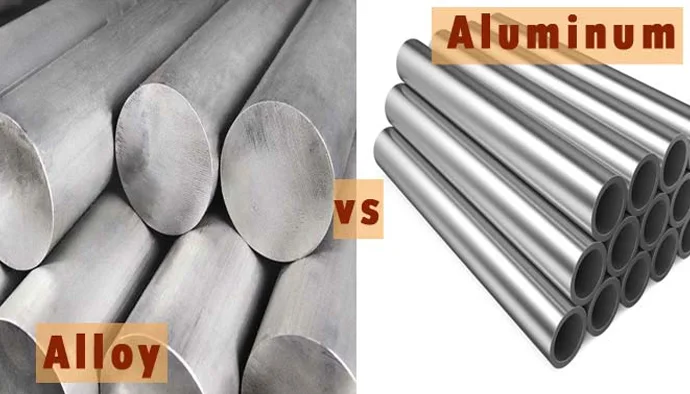
So, to directly answer the burning question: No, alloy is not the same as aluminium. Rather, aluminium is often the primary ingredient in an aluminium alloy. An aluminium alloy is a mixture where aluminium is the star, but other elements play crucial supporting roles.
Why do we bother with this mixing and mingling? Because pure aluminium, while fantastic for some things, simply isn't tough enough for many applications. We need it to be:
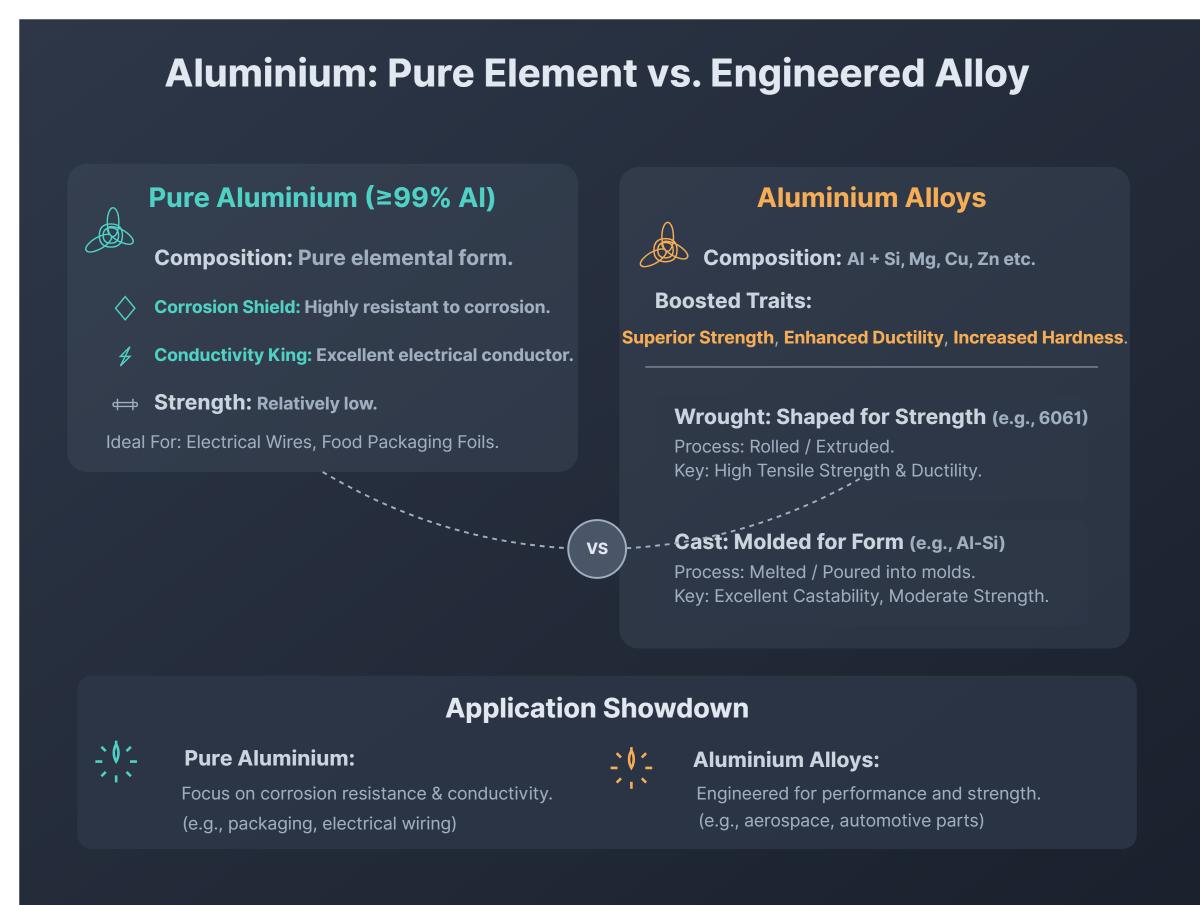
- Stronger: Imagine trying to cycle on a bike frame made of something as soft as foil! Aluminium alloys are what give bikes, car wheels, and aeroplane parts their incredible strength-to-weight ratio. They can handle bumps, stresses, and the general wear and tear of life.
- Harder: For things that need to resist dings and dents, like laptop casings or tools, alloys step up to the plate.
- More Durable: Sometimes, adding other elements can make the metal even more resistant to specific types of corrosion or fatigue over time.
- Better at Specific Jobs: Different alloy recipes are created for different purposes. Some are amazing for welding, others for casting into intricate shapes, and some for resisting extreme temperatures. It's like having a specific tool for every job!
A Few Everyday Stories
Think about the sleek, lightweight frame of a modern mountain bike. That's almost certainly an aluminium alloy. If it were pure aluminium, it would buckle the first time you hit a pothole! The added magnesium or zinc in the alloy makes it tough enough to handle adventurous trails and daring jumps.
Or consider the shiny, attractive wheels on many cars. Those "alloy wheels" aren't pure aluminium; they're carefully crafted aluminium alloys. This makes them significantly lighter than steel wheels, improving fuel efficiency and handling, while still being strong enough to withstand the rigours of the road. It’s a win-win!
Even in your kitchen, if you have a sturdy, lightweight cooking pot that isn't stainless steel, chances are it's made from an aluminium alloy. It conducts heat beautifully, but it's much more robust than a disposable aluminium tray.
Why Should YOU Care? (Beyond Impressing Your Friends)
So, why is this distinction more than just a bit of metal-nerd trivia? Because understanding it helps you appreciate the world around you and make smarter choices!
1. Quality and Price: When you see an "aluminium" product, knowing whether it's an alloy or pure metal can explain a lot about its price tag and intended use. A cheap, lightweight camping chair might be simpler aluminium, while a high-end camera body will boast a specific aluminium alloy designed for durability and precision.

2. Performance and Safety: In things like cars, bikes, or even aeroplanes, the choice of alloy is critical for safety and performance. You definitely want that aeroplane wing to be made from a super-strong, carefully chosen aluminium alloy, not just plain soft aluminium!
3. Durability: If you're buying outdoor furniture or window frames, knowing it's an aluminium alloy means you're investing in something that's built to last and resist the elements, looking good for years to come.
Next time you pick up something made of this fantastic lightweight metal, whether it's a sparkling new gadget or your trusty bike, you'll have a little secret smile. You'll know that behind that familiar shimmer lies a whole world of clever chemistry and engineering – often, the hidden strength of an aluminium alloy making our everyday items lighter, stronger, and simply better. It's not just aluminium; it's aluminium on a superpower boost!