
Hey there, buddy! Ever looked at a cool metal project or a broken tool and thought, "Man, I wish I could just stick those pieces together myself?" Well, guess what? You totally can! And it's probably easier than you think, especially if we're talking about welding with a wire welder. No fancy stick-figure drawings here, just actual metal sticking together. Let's dive in!
What Even Is a Wire Welder?
So, what exactly is a wire welder? Think of it as the friendly, approachable cousin in the welding family. You've got two main types: MIG (Metal Inert Gas) and Flux-Cored. MIG uses a shielding gas (like CO2 or an Argon blend) to protect your weld from the air, making super clean, pretty welds. It’s like wrapping your weld in a cozy, invisible blanket!
Flux-cored, on the other hand, has a special wire that creates its own shielding gas as it melts – no extra tank needed! It's fantastic for outdoor work or on slightly thicker, dirtier stuff, because it's a bit more forgiving. Either way, the magic is that a continuous wire feeds through a gun, and when it touches your metal, poof – an arc! Easy peasy, right?
Safety First! (But Fun!)
Before we get all sparky, let's talk safety. I know, I know, snoozeville. But trust me, you don't want to look like you've had a staring contest with the sun or gotten a bad sunburn... on your eyeballs. So, grab your gear!
A good welding helmet is a must – auto-darkening ones are pure gold. Thick gloves (leather, please!), a long-sleeved jacket or apron (no synthetic stuff, unless you like melted plastic on your skin!), and closed-toe shoes are your best friends. Think of it as your superhero costume, but for metal-bending instead of crime-fighting. And don't forget good ventilation! Welding fumes are like that weird smell in your fridge you can't quite identify – best to avoid them.

Getting Started – Setup Time!
Alright, gear's on, safety dance complete! Now for the actual machine. First, plug that bad boy in! Make sure you're on a dedicated circuit if possible, especially for bigger machines. No tripping breakers allowed!
Next, pop open the side panel and load your wire spool. It's usually pretty straightforward – thread it through the drive rollers (make sure they match your wire size!) and out through the gun. If you're using MIG, hook up your gas tank and set the flow. For flux-cored, skip the gas – less to fuss with!
Oh, and the ground clamp! This little guy is super important. Clamp it firmly to your workpiece or welding table. No ground, no weld! It's like trying to make a phone call without reception. Make sure your metal is also as clean as a whistle – no paint, rust, or gunk. Clean metal = happy welds!

The Actual Welding Part – Let's Get Sizzling!
Okay, this is where the fun begins!
First, settings. Your welder will have a voltage dial and a wire speed dial. Think of voltage as the 'heat' and wire speed as how much filler material you're throwing into the puddle. These two work together like a dynamic duo! Start with the settings recommended on your machine's chart (usually inside the wire spool door) for the thickness of metal you're welding. Don't be afraid to tweak 'em later!
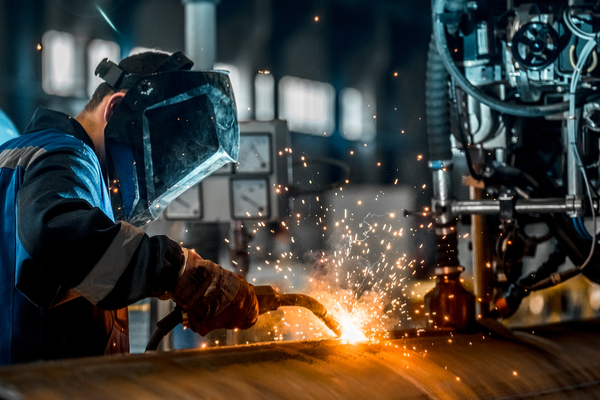
Next, stance and grip. Get comfortable! Hold the gun like you're aiming a futuristic laser pointer. Position yourself so you can see your weld puddle clearly through your helmet. You're basically playing a very precise, very sparkly video game.
Now, the technique. For beginners, a 'push' technique (pushing the gun away from the weld puddle) is often easier to see and creates flatter, wider beads. Imagine you're pushing a tiny broom, sweeping the molten metal forward. Maintain a consistent arc length – that's the distance between the wire tip and your metal. Too far, and it'll sound like bacon frying aggressively (too much spatter!). Too close, and it'll try to stick. You want a nice, steady sizzle, like butter melting on a hot pan.
Your travel speed is also key. Go too fast, and your weld will look thin and ropey. Too slow, and you'll end up with a big, gloppy mess, or worse, burn right through! A slight circular motion or a 'wiggle' (like tiny cursive 'e's) can help spread the heat and fill the joint nicely. But honestly, just focus on keeping that arc consistent and moving forward at an even pace to start. You'll get fancy later!

Oops! Troubleshooting 101
Don't worry if your first welds look like a pigeon did its business on your metal. That's totally normal! Every pro started somewhere (and probably made a few pigeon-poop welds themselves).
- Looks like popcorn/lots of spatter? Your voltage might be too high, or your wire speed too low. Or your stickout (how much wire is sticking out of the gun) is too long. Adjust those dials!
- Wire keeps sticking and balling up? Probably not enough heat (voltage). Crank it up a notch!
- Burning holes through your metal? Oops! Too much heat, my friend. Turn down the voltage or speed up your travel.
The key is to listen and look. A good weld has a consistent, smooth sizzle and a nice, even puddle. Practice on scrap metal until you find that sweet spot! It’s like learning to ride a bike – you fall, you get back on, and suddenly you’re cruising!
You've Got This, Future Metal Maestro!
See? Not so scary, right? Wire welding is an incredibly rewarding skill that opens up a whole world of DIY possibilities, from repairing garden gates to building awesome metal art. It might take a bit of practice to get those beads looking like perfect stacked dimes, but every spark is a step closer to mastery. So grab your gear, fire up that machine, and let your creativity weld its way into existence. You've got this, you magnificent metal sculptor! Now go make some sparks fly (safely, of course!). The world is your oyster... or rather, your metal project!