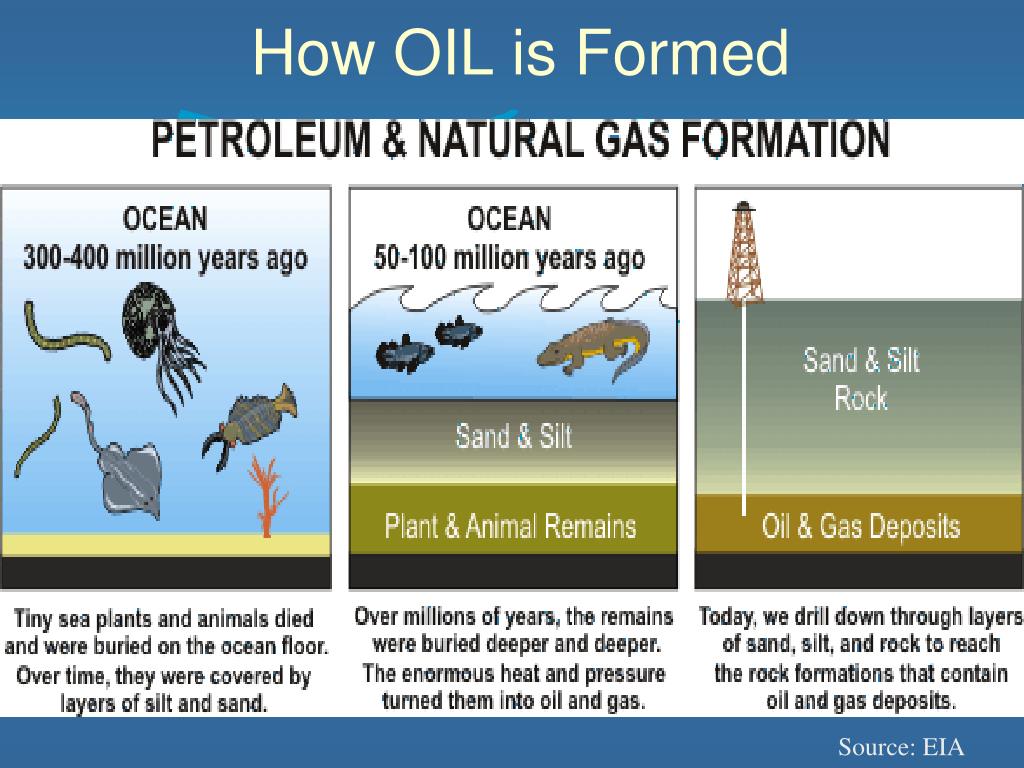
Ever wonder about that magical goo that powers our cars, heats our homes, and makes countless things possible? We're talking about oil, of course! It’s this incredibly vital, yet often mysterious, liquid gold. But how does it even get there, deep within the Earth? Get ready for a surprisingly fun journey, because the story of oil formation is way cooler than you might think!
Forget what you heard about dinosaurs. Seriously, put that image of a T-Rex turning into gasoline right out of your head. It’s one of the biggest misconceptions out there. While dinosaurs were certainly around, they aren't the main ingredient in your gas tank. So, if not giant prehistoric beasts, then who are the true rockstars of oil formation?
The Tiny Titans of the Deep
The real heroes are, believe it or not, teeny-tiny marine organisms. We’re talking about phytoplankton, zooplankton, algae, and bacteria. Billions upon billions of them! Imagine a microscopic rave happening in ancient oceans and lakes. These little guys lived vibrant, busy lives, soaking up sunlight and munching on nutrients.
When these microscopic marvels finally kicked the bucket (as all things do!), they didn't just vanish. Instead, they began a long, slow descent to the bottom of the water body. And here’s a quirky bit: they needed to sink in places where there wasn't much oxygen. Why? Because if oxygen was plentiful, scavengers and bacteria would have munched them all up, and we'd have no oil! So, they settled into an anaerobic (oxygen-deprived) environment, safe from hungry mouths.
The Organic Sludge Layer
Over millions of years, these dead organisms accumulated. Picture this: a thick, gooey, organic sludge forming layer after layer on the seafloor. It’s like a really ancient, incredibly rich, and slightly smelly lasagna made of dead plankton. This initial organic soup is the absolute starting point for all the oil we use today. It's not pretty, but it's essential!
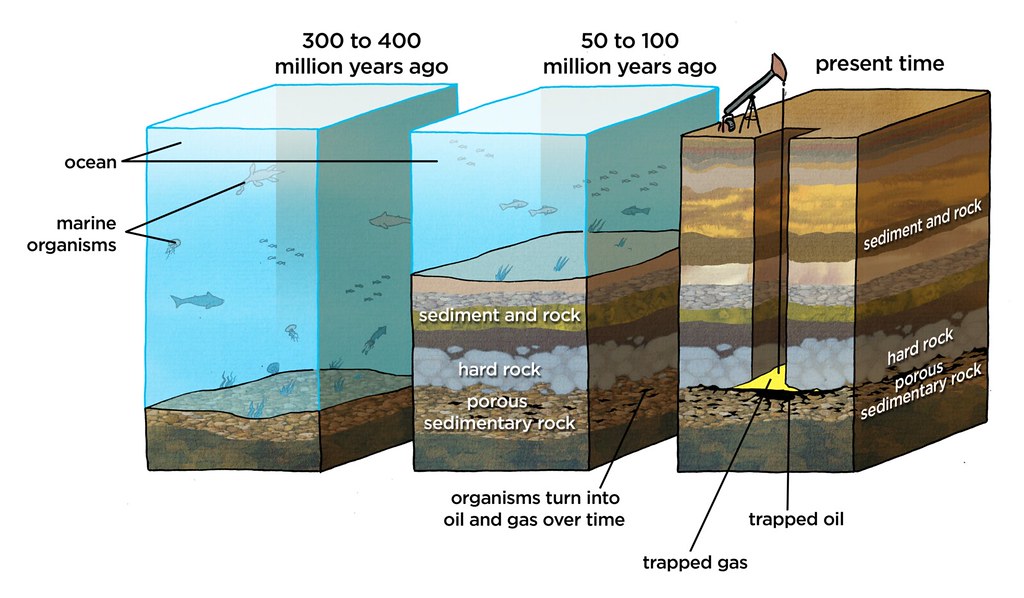
More and more sediment started piling on top of this organic mush. Sand, silt, mud, tiny bits of rock – all washing in from rivers and settling down. This is where things get interesting. As layers build up, the weight becomes immense. We're talking about pressure so intense it would squish you flatter than a pancake!
The Great Squeeze & Bake
This immense pressure does a couple of things. First, it compacts that gooey organic layer, squeezing out all the water. It turns into a denser substance called kerogen. Think of it as a kind of solid, waxy organic rock. But it’s not oil yet! This is where the Earth's natural oven comes into play.
Deep within the Earth, things get hot. Really hot. The kerogen layer sinks deeper and deeper, getting closer to the planet's fiery core. It enters what geologists call the "oil window." This is a specific temperature range, typically between 60°C and 160°C (140°F to 320°F), and it's absolutely crucial. If it's too cold, nothing happens. If it's too hot, the kerogen turns straight into natural gas or even graphite – no oil for us!

So, the kerogen is getting cooked, slowly but surely, for millions upon millions of years. That intense heat and pressure break down the complex organic molecules of the kerogen into simpler, lighter hydrocarbon chains. Voilà! We now have liquid oil and natural gas.
The Grand Escape (and Trap)
Once formed, this new oil and gas doesn't just sit there. It’s lighter than the surrounding water and rock, so it starts to migrate. It literally tries to escape upwards, seeping through tiny cracks and pores in the rock. Imagine bubbles trying to rise through thick mud – that's your oil, slowly making its journey.
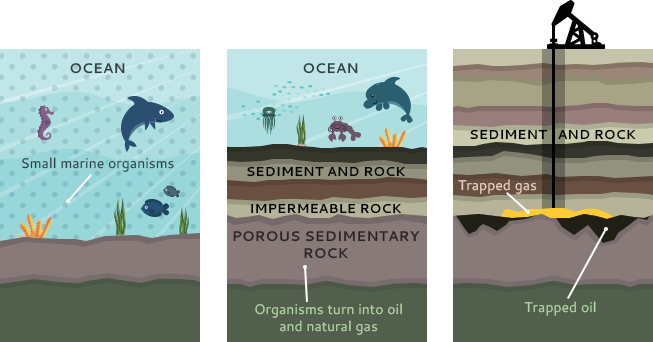
But thankfully for us (and the oil industry!), it doesn't always make it all the way to the surface. Sometimes, it hits a barrier: a layer of impermeable rock, like dense shale or a salt dome. These geological formations act like gigantic underground Tupperware containers, trapping the oil and gas in what we call a reservoir rock. These "traps" are exactly what exploration geologists spend their lives trying to find!
Why This Story Rocks!
Isn’t that just mind-boggling? From countless tiny organisms living and dying, to immense pressure and precise temperatures over staggering timescales, all culminating in the creation of the fuel that powers our modern world. It’s a testament to the Earth’s incredible, slow-motion alchemy.
So, the next time you fill up your car, give a little nod to those ancient, microscopic critters and the epic geological forces that transformed them. It's a journey that spans eons, and it’s a brilliant reminder of the hidden wonders constantly unfolding beneath our feet. How cool is that?
