:max_bytes(150000):strip_icc()/the-difference-between-watts-vs-volts-4767057_V3-9bb4bdf5c97d4f758cbc185d40376e89.png)
Alright, settle in, because we're about to tackle one of those brilliantly sneaky questions that sounds simple but hides a little electrical secret. You ready? Here it is: "How many watts are in 110 volts?"
Sounds straightforward, right? Like asking "how many apples are in a basket?" But hold up! This isn't that kind of question. It’s actually a fantastic little trickster that unlocks a super cool understanding of how electricity actually works in your home. And trust me, it’s more fun than it sounds!
The Big Reveal: It's a Trick Question!
Drumroll, please... You can't directly convert volts to watts! Mind blown, right? It’s like asking, "How many miles are in an hour?" You can't just swap one for the other. You need more information!
See, volts are all about the pressure or the "push" of electricity. Think of it like water pressure in a hose. If you have high voltage, you have a lot of electrical pressure.
But pressure alone doesn't tell you how much water is actually coming out, does it? For that, you need the flow. In electricity-land, that flow is called amps (short for amperes). Amps measure the amount of electricity moving through the wire.
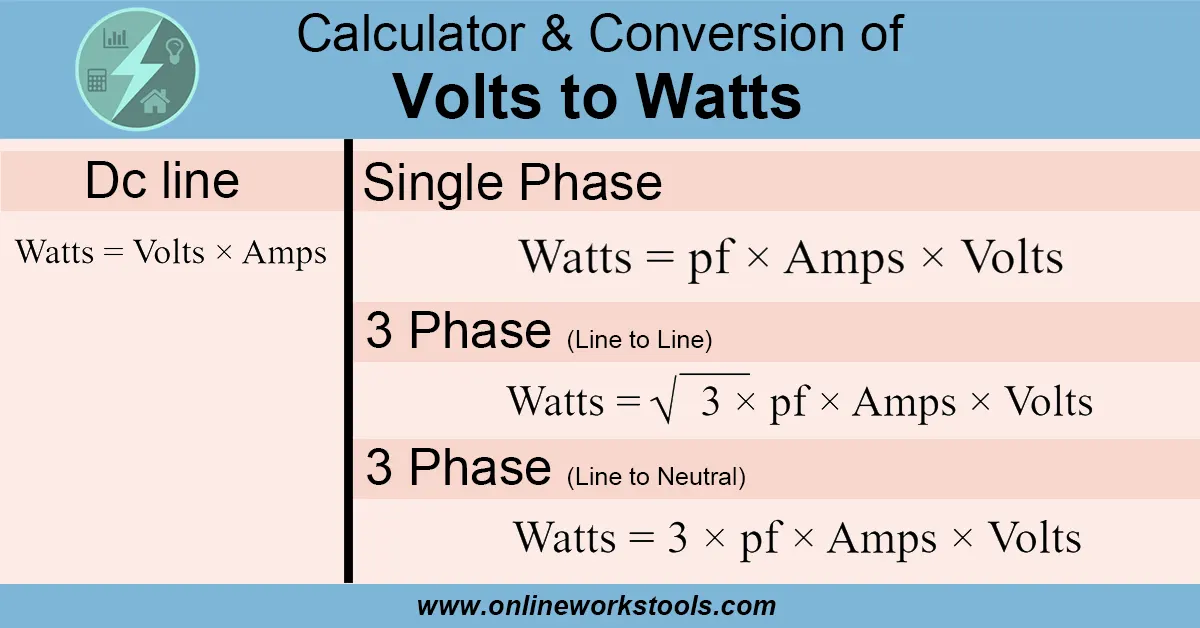
Now, what about watts? Watts are the grand finale! They measure power. They tell you how much actual work the electricity can do. Like how much force the water coming out of the hose can generate. So, a powerful jet of water has high watts!
The Magic Formula: Watts = Volts x Amps
Ta-da! This is the secret handshake of electricity. To figure out the wattage, you always need both the volts and the amps. So, your 110-volt wall outlet? It’s got that electrical pressure, but until you plug something in, there are no amps flowing, and thus, no watts being used!

Plug in a tiny phone charger? Low amps, low watts. Plug in a giant toaster oven? High amps, high watts! It's all about how much electrical "juice" your device is pulling.
A Quirky History: Why 110 Volts Anyway?
Ever wonder why our household outlets are usually around 110-120 volts in North America? It’s a relic from the epic "War of the Currents" between Thomas Edison (champion of DC – direct current) and Nikola Tesla & George Westinghouse (champions of AC – alternating current) way back in the late 19th century.
Edison initially settled on 110 volts for his DC system. Why? Mostly for safety and the cost-effectiveness of his incandescent light bulbs at the time. When AC eventually won (because it could be transmitted over long distances much more efficiently), Westinghouse basically adopted the 110V standard to make the transition easier for existing infrastructure. Isn't that wild? Our everyday electricity is a shout-out to a forgotten electrical battle!

Watts Around the World: A Global Glimpse
If you've ever traveled abroad, you might have noticed different plugs and different voltages. Most of the world uses 220-240 volts! Why the difference? Well, higher voltage means you can deliver the same amount of power with less current (fewer amps). Less current means thinner wires, which means cheaper infrastructure, especially for entire countries building grids from scratch.
So, our 110V system, while perfectly safe and functional, is a bit of a historical anomaly. And it means you definitely need a voltage converter (not just a plug adapter!) if you want to use your North American toaster in, say, Germany or vice-versa. Otherwise, you might get a smoky, exciting surprise!

The Fun of Figuring it Out!
So, next time someone asks, "How many watts are in 110 volts?" you can flash them a knowing smile. You're now in on the secret! You know it's not a simple number, but a dynamic relationship between electrical pressure and flow. It's the difference between asking "how fast can a car go?" (volts) and "how far did that car travel?" (watts) without knowing how long it was driving (amps).
This little query isn't just about electricity; it's about critical thinking. It teaches us that sometimes, the simplest questions hide the most interesting complexities. It's a tiny window into the amazing, invisible world of power that lights up our lives, charges our phones, and toasts our bagels.
So go ahead, feel empowered! You've just leveled up your understanding of the electrical magic humming behind your walls. And that, my friend, is a pretty electrifying fact indeed!