Alright, hands up if you’ve ever walked into a room, flicked the light switch, walked out, and then hours later had that horrifying realization: “Oh. My. Goodness. Did I just leave the kitchen light on all day?”
Yeah, me too. More times than I’d like to admit, actually. My first thought (after a brief moment of self-loathing) isn't always about the planet, I confess. It's usually, "How much is that going to cost me on my electricity bill?!"
And that, my friend, brings us neatly to the burning question (pun intended, maybe, just a little bit): how many Kw does a light bulb actually use?
It’s a question that pops into our heads, often spurred by those little moments of forgetfulness or when you're just trying to be a bit more energy-conscious. Let’s unravel this mystery together, shall we?
What’s a "Kw" Anyway? (The Super Simple Version)
Before we dive into bulb specifics, let's quickly demystify “Kw.” Kw stands for kilowatt. Think of it as a unit of power. If you imagine electricity flowing like water, wattage (W) or kilowattage (Kw) tells you how fast that water is flowing at any given moment.
It's like the horsepower of your car – it tells you its capacity to do work. A light bulb's wattage tells you how much electrical power it demands when it's on. Simple, right?
The Old-School Energy Guzzlers: Incandescents
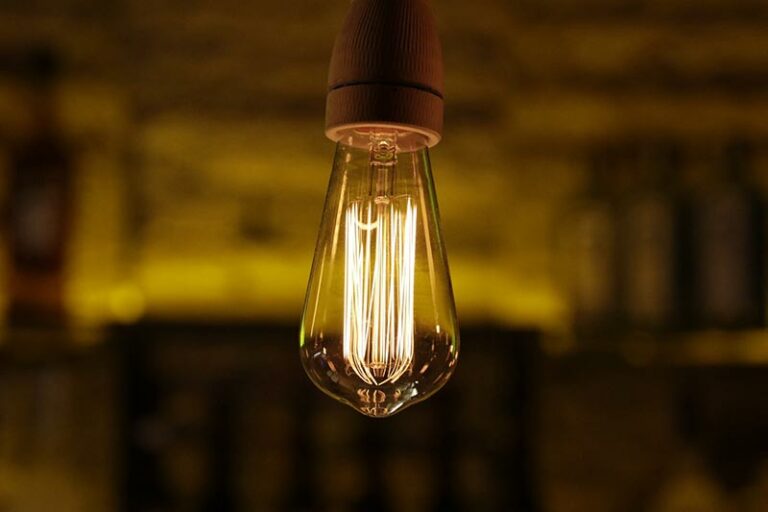
Remember those classic, glowing bulbs from way back when? The ones that got super hot and made a satisfying "pop" when they finally gave up the ghost? Those were incandescent bulbs, and bless their filament-filled hearts, they were not exactly efficiency champions.
A typical incandescent bulb might be 60 watts (W) or even 100W. To convert that to Kw, you just divide by 1000. So, a 60W bulb uses 0.06 Kw, and a 100W bulb uses 0.1 Kw. Seems small, but stick with me, it adds up!
A huge chunk of that energy wasn't even going into making light; it was just wasted as heat. No wonder they felt like mini suns!
The Middle Child: CFLs
Then came the slightly twisty, curly bulbs – Compact Fluorescent Lamps (CFLs). These were a big step up! They used much less energy to produce the same amount of light as their incandescent predecessors.

Where you might have used a 60W incandescent, you could often get the same brightness from a CFL that was only around 13W to 15W. That’s roughly 0.013 Kw to 0.015 Kw. See? Already a noticeable drop!
They took a moment to warm up to full brightness and contained a tiny bit of mercury, but they were definitely a greener option for a while.
The Modern King: LEDs
And then, my friends, the game truly changed. Enter the LED (Light Emitting Diode) bulb. These little miracles are the superstars of energy efficiency. They are the reason you can forget your light on all day and not completely panic (though you still shouldn't!).
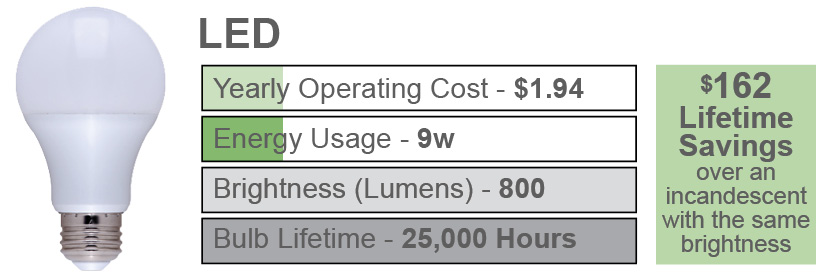
An LED bulb that provides the same amount of light as that old 60W incandescent or 13W CFL usually only draws a measly 8W to 10W. So, we're talking about 0.008 Kw to 0.01 Kw.
Let that sink in for a second. An LED uses roughly ten times less energy than an old incandescent for the same light output. Mind-blowing, right?
Kw vs. kWh: What You Actually Pay For
Okay, so we know how many Kw a bulb uses at any given moment. But your electricity bill doesn't charge you for Kw; it charges you for kilowatt-hours (kWh). This is where the "time" factor comes in.
One kWh means using 1 kilowatt of power for 1 hour. It's the total amount of energy consumed over a period. So, if your forgotten 100W (0.1 Kw) incandescent bulb was on for 10 hours, it used 1 kWh of electricity.

Now, if that forgotten bulb was an 8W (0.008 Kw) LED, running for 10 hours, it would only use 0.08 kWh. See the difference? That’s a lot less money for the same amount of light!
So, What's the Takeaway?
The moral of the story is pretty clear: if you’re still rocking any old incandescent bulbs, it might be time for an upgrade. Switching to LEDs is one of the easiest and most impactful ways to reduce your energy consumption and save some cash on those electricity bills.
Next time you're buying a bulb, don't just look at the "watts" as a measure of brightness (that's an old habit!). Instead, look at the lumens (which tells you how bright it truly is) and then check the wattage to see how much power it actually draws. Go for the lowest wattage for your desired brightness.
And hey, maybe try to remember to turn off the lights when you leave a room. Even with super-efficient LEDs, every little bit helps – for your wallet and for our lovely planet. No more forgotten-light-bulb panic attacks for us!