So, you've got a Tesla, or maybe you're dreaming of one. You've probably heard folks chatting about "amps" when it comes to charging, and if you're anything like me, your eyes might have glazed over a little. Amps, volts, watts – it's enough to make you feel like you need a degree in electrical engineering just to plug in your car!
But fear not, future electric warrior! We're going to demystify this amp business with some seriously silly comparisons that'll have you nodding, smiling, and maybe even understanding it by the end. Think of me as your friendly, slightly clumsy guide through the wild world of Tesla charging.
Amps 101: It's Like Water Pressure, But for Electrons
Forget complex diagrams. Imagine electricity as water flowing through a hose. Volts are like the water pressure – how hard the water is pushing. And amps? That's the volume of water flowing through the hose. More amps mean more electrons pushing through at once, like a wider, gushier stream of water. Makes sense, right? A trickle charges slowly, a gush charges fast!
Your Tesla, bless its high-tech heart, needs a certain "thirst" quenchable by these electron streams. How much "thirst" it can handle, and how quickly, often comes down to the amps.
Your Standard Wall Outlet: The "Leaky Faucet" Charge
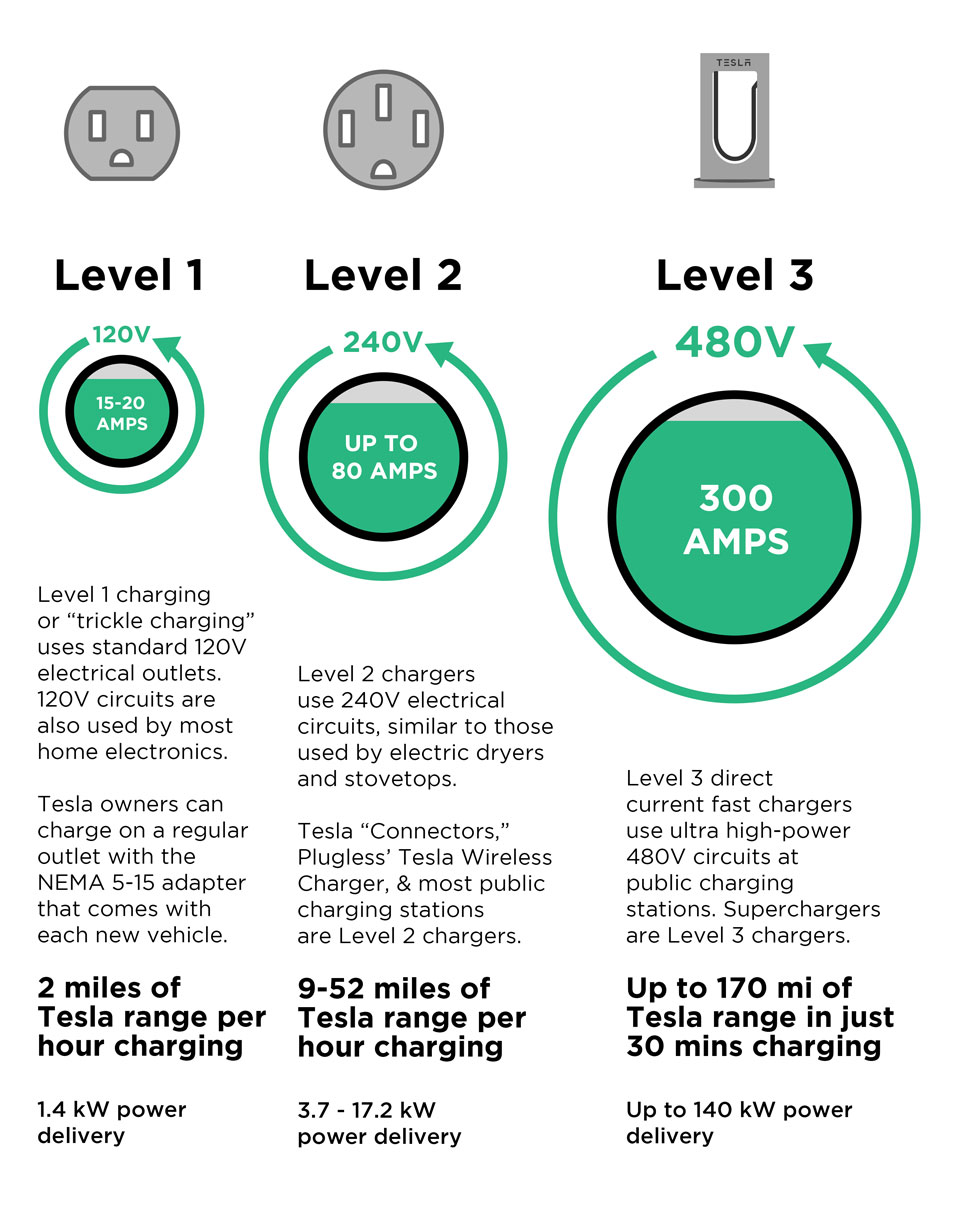
Remember that basic 120-volt outlet in your garage? The one you plug your toaster into? That's your Level 1 charger. It's usually delivering around 12 amps (sometimes 8A, sometimes 16A, depending on your car's settings and the adapter). This is the equivalent of trying to fill a swimming pool with a leaky garden faucet. You'll get there, eventually. Probably by next Tuesday.
It's great for folks who drive very little, or just need to "top off" a tiny bit overnight. Think of it as putting your Tesla on life support while you sleep. You might gain 3-5 miles of range per hour. It's gentle, it's slow, and it'll make you appreciate faster charging like you've never appreciated anything before.
Stepping Up: Your Home's 240V Outlet (The "Garden Hose" Upgrade)
Now we're talking! This is where most Tesla owners find their happy place for home charging. We're talking about a 240-volt outlet, like the one your electric dryer or oven uses. This is your Level 2 charger, and it's a game-changer.
With a proper setup (like a Tesla Wall Connector or a NEMA 14-50 outlet), you can pull significantly more amps. We're talking anywhere from 30 amps to 80 amps, depending on your home's electrical capacity and the specific charger you install. Most homes will comfortably handle 30 to 48 amps for daily charging.
This is like upgrading from that leaky faucet to a proper garden hose. You can add anywhere from 20-45 miles of range per hour. This means you can plug in your Tesla after dinner, and by breakfast, it's usually fully charged and ready to zip you to work, soccer practice, or that spontaneous road trip.

Finding the right amp sweet spot here is crucial. Too many amps for your circuit breaker, and you'll be tripping it faster than a toddler on a sugar rush. Too few, and you'll be waiting longer than necessary.
The Tesla Supercharger: The "Fire Hose" or "Hyper-Caffeinated Squirrel" Charge
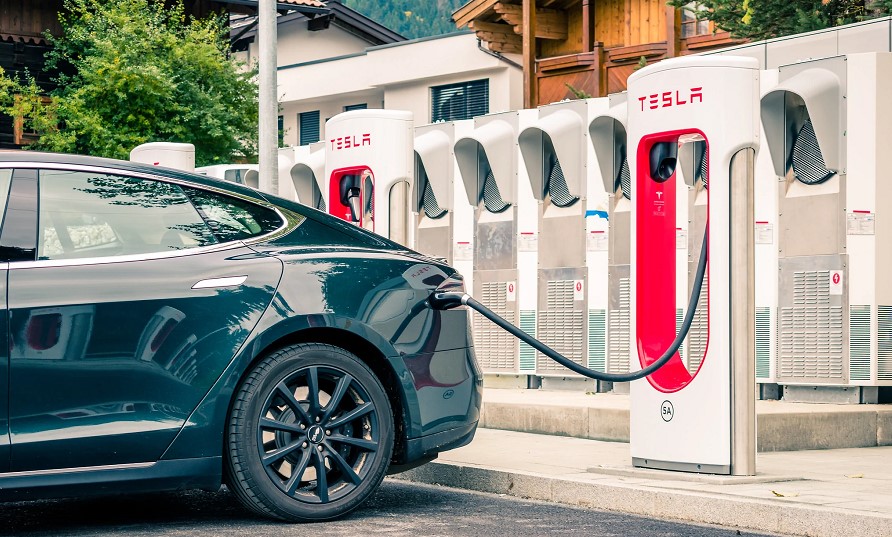
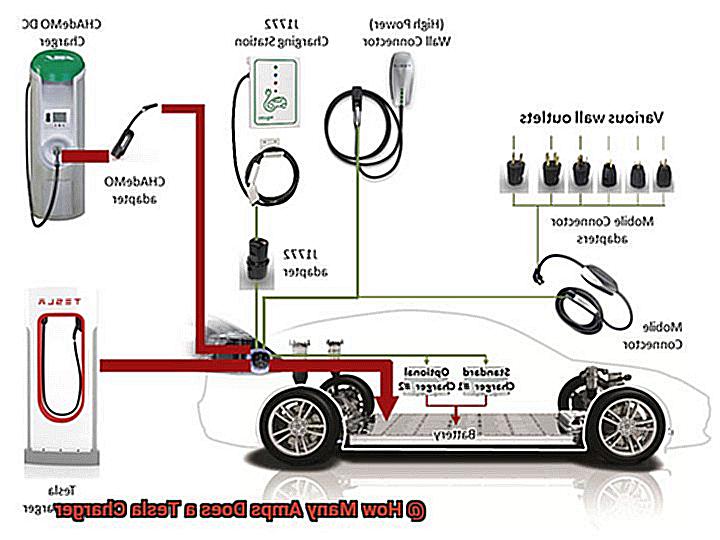
Ah, the Supercharger. This is not for the faint of heart, or for your garage. These are those big, futuristic-looking stations you see along highways and in shopping centers. They're DC fast chargers, and they bypass your car's onboard charger entirely, pumping direct current straight into the battery.
We're talking huge amounts of power here – often hundreds of amps at very high voltages (like 400-800V). Tesla doesn't typically list the "amps" for Superchargers in the same way, because the power output (measured in kilowatts, kW) is what matters most, and it varies wildly depending on battery state of charge, temperature, and how many other Teslas are sharing the power from that station.

But rest assured, it's like plugging your car into a fire hose. You can get hundreds of miles of range in mere minutes (think 20-30 minutes for a significant charge). Perfect for road trips when you need a quick top-up to get to your destination. Just don't expect to install one in your driveway unless you also plan on powering a small city.
Why Does It Matter, Anyway? (Time is Money, Buddy)
Ultimately, amps boil down to how fast your Tesla drinks electricity. And how fast it drinks electricity directly translates to how long you have to wait for it to be ready. Do you need a little sip overnight, or a big gulp before your morning commute?
Understanding amps helps you:
- Choose the right home charger: Don't pay for an 80-amp charger if your house can only handle 40 amps.
- Manage your expectations: Don't expect a full charge overnight from a standard wall outlet.
- Avoid electrical meltdowns: Overloading your circuit with too many amps is a bad idea.
Finding Your Amp Sweet Spot (It's Not One-Size-Fits-All)
Your ideal home charging amp level depends on a few things:
- Your daily driving habits: Do you drive 20 miles a day or 150?
- Your home's electrical panel: What spare capacity do you have? An electrician can tell you this.
- Your car's onboard charger: Older Teslas might max out at 48A or even 40A, even if you feed them more. Newer ones can often handle more.
For most people, a 240V setup providing 30 to 48 amps is the sweet spot. It's fast enough for daily needs, usually compatible with typical home electrical systems, and doesn't require industrial-level wiring. It’s like having a perfectly efficient coffee machine – just the right brew, at just the right speed.
The Bottom Line (Keep it Simple, Superstar)
So, how many amps to charge a Tesla? It truly depends on how quickly you want that charge! From the leisurely 12 amps of a wall outlet to the robust 30-80 amps for home charging, to the "blink and you'll miss it" speeds of a Supercharger – each serves a different purpose.
Don't let the technical jargon intimidate you. Think of amps as the flow rate of electricity, and then pick the "hose" that fits your lifestyle. Now go forth and charge your Tesla with confidence, knowing you're a little bit wiser about those mysterious little electrons!