Hey there, fellow road warrior! Ever found yourself staring at your car battery, scratching your head, and wondering, "Just how many amps are lurking in this mysterious power brick?" You're not alone! It's a common question that sounds simple but can get delightfully tangled in technical jargon faster than you can say "jump start."
But fear not, my friend! We're going to unravel this little electrical mystery together, without needing a degree in quantum physics or even a particularly strong cup of coffee. Think of me as your friendly neighborhood car battery whisperer, here to translate the science into plain, fun English.
Amps, Volts, and Oh My! The Basics
First things first, let's clear up some common confusion. When people ask "how many amps are in a car battery," they're often mixing up a few related, but distinct, concepts. It's like asking "how many calories are in a marathon" – you mean the energy needed for the marathon, not calories inside it, right?
Your car battery primarily deals with three main players:
- Volts (V): Think of this as the pressure, the "oomph" pushing electricity. Most car batteries are 12-volt.
- Amps (A): This is the flow or current – how much electricity is moving.
- Amp-Hours (Ah): Ah, now we're getting warmer! This is the battery's capacity, telling you how many amps it can deliver over a certain time.
It's Not a Bucket of Amps (Sadly, No Electric Fish)
Here's the big reveal: a car battery doesn't hold a static number of "amps" ready to burst out like a piñata full of electricity. Instead, it holds a certain charge, which it then releases as amps when needed. It’s more like a reservoir than a bucket. You wouldn't ask how many gallons are in a river at any given second, but rather how much water the reservoir holds or how many gallons per minute flow past, right?

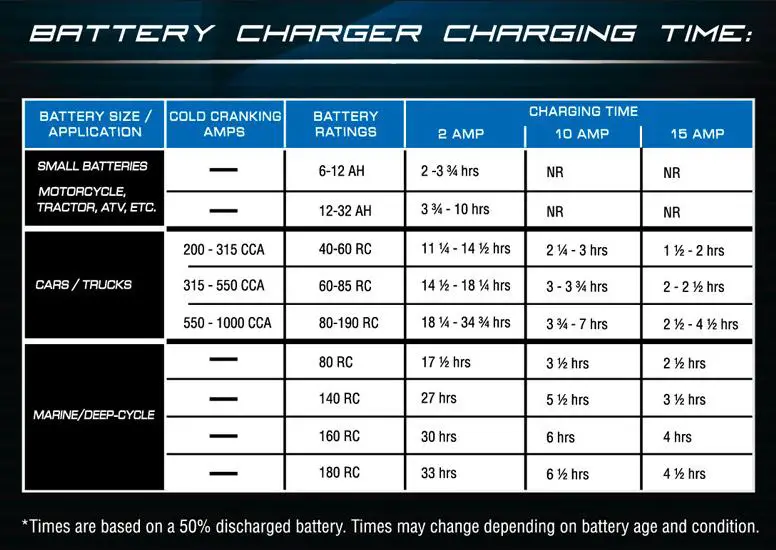
So, when you see a number on your battery label like "60 Ah", that's your Amp-Hour rating. This means the battery can theoretically supply 60 amps for one hour, or 1 amp for 60 hours (you get the drift!). Most passenger car batteries range anywhere from 40 Ah to 100 Ah. This number is super important for how long your lights, radio, or charging ports will work when the engine isn't running (but seriously, don't test it for too long!).
The Mighty Burst: Cold Cranking Amps (CCA)
But wait, there's another crucial "amp" number on your battery: CCA, which stands for Cold Cranking Amps. This isn't about capacity over time; it's about raw, instantaneous power!
CCA tells you how many amps the battery can deliver for 30 seconds at 0°F (-18°C) while maintaining a minimum voltage. Basically, it's the battery's ability to give your engine that enormous, sudden jolt it needs to start, especially when it's freezing cold and the engine oil is thick like molasses.

Think of it like this: the Ah rating is how far a marathon runner can go, while the CCA rating is how powerful their 100-meter sprint is. You need both for a healthy, happy car! Most car batteries have a CCA rating between 300 and 1000. If your car struggles to start in winter, a low CCA could be the culprit!
Why Does This Even Matter To Me?
Understanding these numbers empowers you! When it's time to replace your battery (and it will be, eventually – they don't last forever, sadly), knowing your Ah and especially your CCA helps you pick the right one. You wouldn't want to accidentally buy a battery designed for a tiny lawnmower for your monster SUV, would you? (Unless you're planning some very quiet, slow off-roading, which sounds... unique.)
A good rule of thumb? Aim for a replacement battery with at least the same Ah and CCA ratings as your old one, or slightly higher if you live in a particularly chilly climate or have lots of accessories.
The Takeaway: Power on Demand!
So, to finally answer our burning question: "How many amps are in a car battery?" It's not a single, static number. Instead, a typical car battery can store enough energy to supply X number of amps for Y hours (its Ah rating), and it can deliver a massive, short-lived burst of hundreds of amps (its CCA rating) to get your engine roaring to life. It's about capacity and instantaneous delivery, not a fixed quantity of current sitting there.
And there you have it! You've successfully navigated the thrilling world of car battery amps, volts, Ah, and CCA. You're now officially a bit more awesome and a lot more knowledgeable. So go forth, drive safely, and enjoy the peace of mind that comes with understanding your trusty vehicle's heart. May your starts be swift, and your journeys always bright!