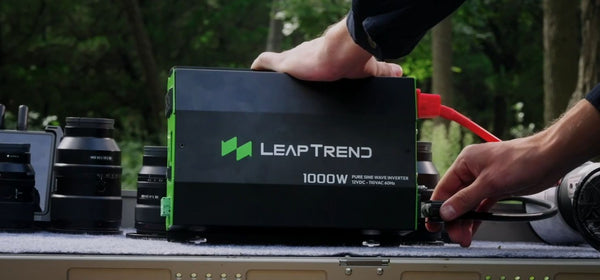
Ever been out camping, trying to charge your phone, or found yourself in a power outage wishing you could just run your coffee maker from your car battery? Yeah, me too! That's where our unsung hero, the DC to AC inverter, swoops in to save the day. It sounds super technical, right? But trust me, once we break it down, it's actually pretty cool and surprisingly straightforward. Think of it as a tiny, electrical magician!
Let's start with the basics, because understanding the problem makes the solution even more brilliant. You see, the electricity that comes out of your car battery, or any regular battery, is called Direct Current (DC). Imagine it as a very polite, one-way street for electrons. They flow steadily in one direction, no fuss, no drama.
But then there's the electricity that powers most of your household gadgets – your laptop, TV, toaster, that glorious coffee maker. That's Alternating Current (AC). AC is like a chaotic dance party for electrons; they keep switching directions, wiggling back and forth really, really fast. Most of our home appliances are designed to dance to this AC tune, and they'd be pretty confused by DC's steady stroll.
So, What Does Our Magical Inverter Do?
Simply put, an inverter is a device that takes that steady, one-way DC electricity and transforms it into the wobbly, back-and-forth AC electricity. It's like a translator for power, converting "battery talk" into "appliance talk." Pretty neat, huh? Let's peek behind the curtain at how this magic trick happens.
Step 1: The Rhythm Section (Oscillator)
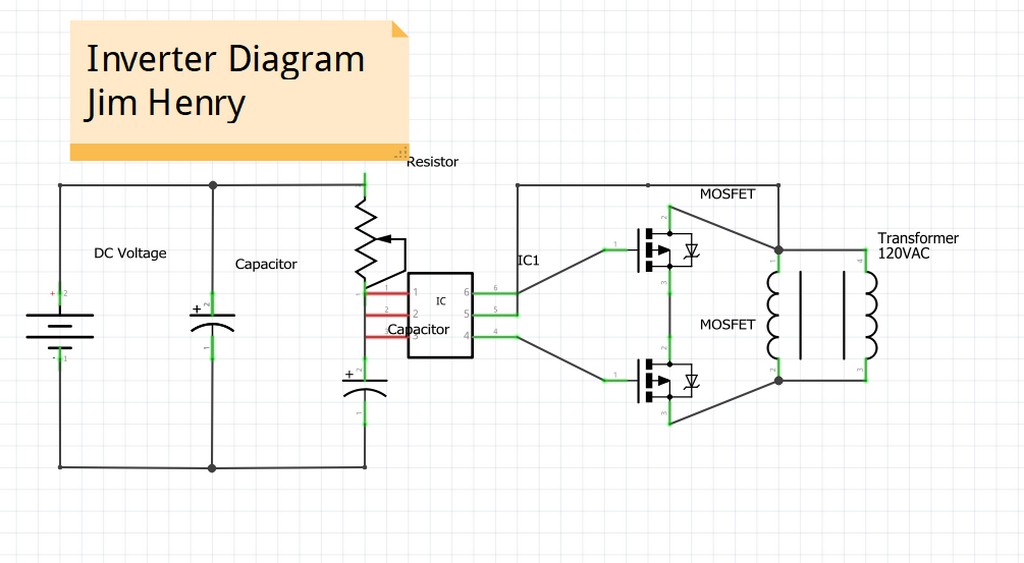
First up, the inverter needs to establish a rhythm. Inside, there's a component called an oscillator. This isn't a fancy musical instrument (though it does create a beat!), but rather a circuit that generates a rapidly switching electrical signal. Think of it as the drummer in a band, setting the tempo for the electron dance party. It decides how frequently the current will "wiggle" – usually 50 or 60 times a second (Hertz), just like your home electricity.

Step 2: The Quick Switcheroo (Switching Circuit)
Now that we have our rhythm, we need to actually make the electrons move to it. This is where power transistors come into play. These are like incredibly fast on/off switches. The inverter uses the signal from the oscillator to rapidly turn these transistors on and off, directing the DC current through them in alternating directions. So, for a split second, the current flows one way, then the transistors flip, and it flows the other way. Back and forth, back and forth! This creates a rough, blocky AC waveform, often called a square wave.
Step 3: The Voltage Boost (Transformer)
Most batteries, like the one in your car, put out a relatively low voltage (e.g., 12 volts DC). But your toaster needs 120 volts (or 240 volts, depending on where you live) AC. No problem! After the quick switcheroo, the now-alternating current goes through a transformer. A transformer is a clever device that can step up (or down) voltage. It's like sending your little 12-volt electron "hop" into a special elevator that turns it into a mighty 120-volt "jump." Ta-da!

Step 4: The Smooth Operator (Filter)
Remember that rough, blocky square wave we talked about? While some simple appliances might not mind it, many sensitive electronics prefer a much smoother, perfectly rounded wave called a sine wave – just like the power from your wall outlet. So, the final step involves a filter (made of components like capacitors and inductors) that smooths out those sharp corners. It's like taking a jagged crayon drawing and making it a perfectly elegant curve. Some inverters produce a "modified sine wave" (still a bit chunky but good enough for most things), while fancier ones produce a "pure sine wave" for your most delicate gadgets.
And There You Have It!
From a steady, polite battery current to the wiggling, high-voltage dance party your electronics love! It's an incredible bit of engineering, all happening silently inside that unassuming box.
So, next time you're powering up your gear off-grid, take a moment to appreciate that little electrical magician, the DC to AC inverter. It’s not just converting power; it’s converting limitations into possibilities, giving you the freedom to bring your creature comforts wherever adventure takes you. Keep exploring, keep creating, and remember, with a little inverter magic, you've always got the power!