Ever found yourself staring blankly at the back of a gadget charger, a power strip, or even a solar panel spec sheet, wondering what the heck "Volts" and "Watts" really mean? You're not alone. It feels like the secret language of electricians, but trust us, it's actually pretty intuitive once you get the hang of it. Think of this as your friendly, no-stress guide to decoding the power jargon and converting volts to watts like a pro. No hard hats required!
The Lowdown: Volts, Amps, and Watts – A Quick Intro
Before we jump into the magic formula, let's get cozy with our three main characters:
- Volts (V): Imagine voltage as the pressure or push of electricity. Like water pressure in a hose – the higher the volts, the stronger the push. This is the potential energy of the electrical charge.
- Amps (A): Amperage, or amps, is the flow rate of that electricity. Sticking with our hose analogy, this is how much water is actually flowing through the hose. A higher amp rating means more electrons are moving.
- Watts (W): This is the big one! Watts measure the actual power being consumed or produced. It’s the rate at which electrical energy is converted into another form of energy (like light, heat, or motion). If volts are the push and amps are the flow, watts are the total work being done – how much juice your device is really using or how much power your solar panel is generating. Think of it as the "oomph!"
The Golden Rule: Converting Volts to Watts (and Why You Can't Do It Alone!)
Here's the crucial bit: You cannot convert volts directly to watts without knowing the amperage. It’s like asking, "How much water is coming out of this hose?" You need to know both the pressure (volts) and the flow rate (amps) to figure out the total power (watts).
The formula is delightfully simple, a true rockstar of electrical engineering:
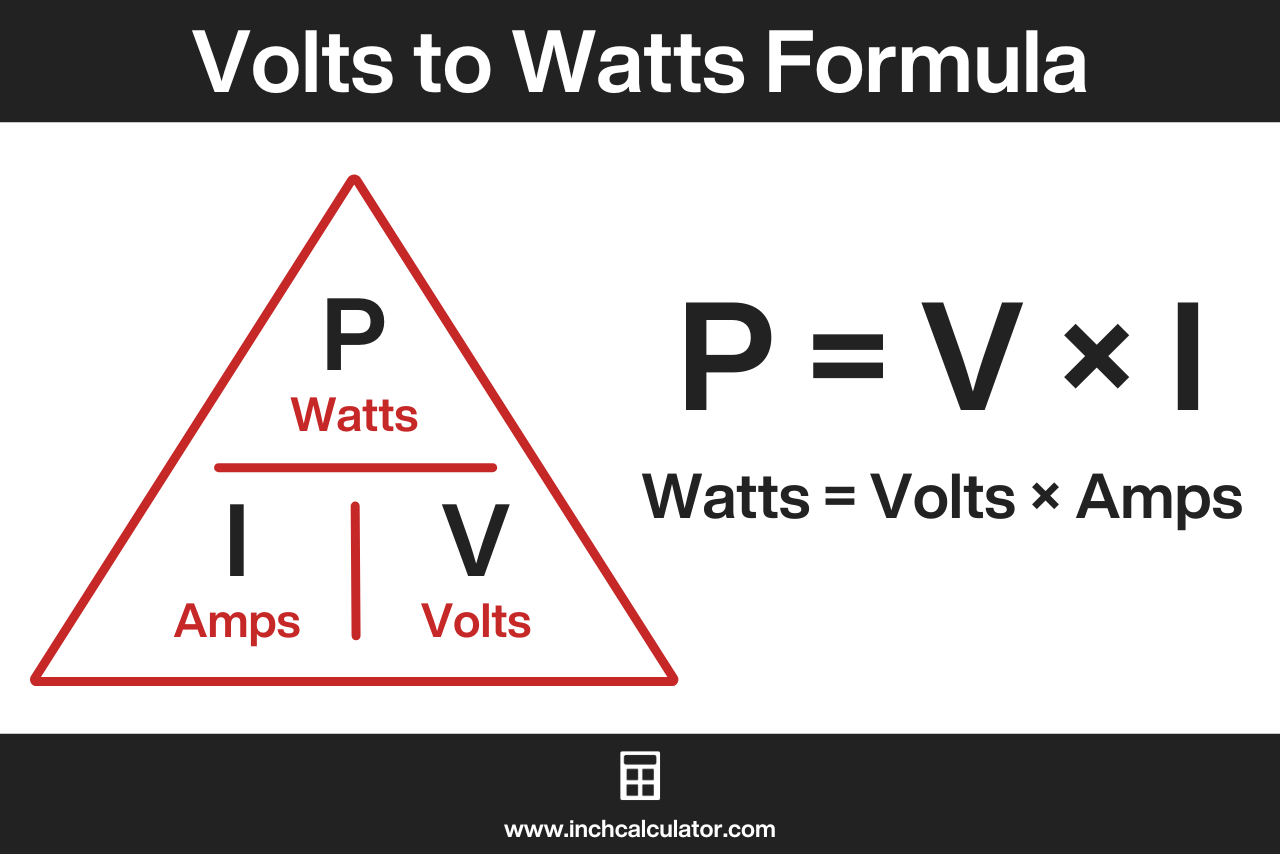
Watts (P) = Volts (V) × Amps (I)
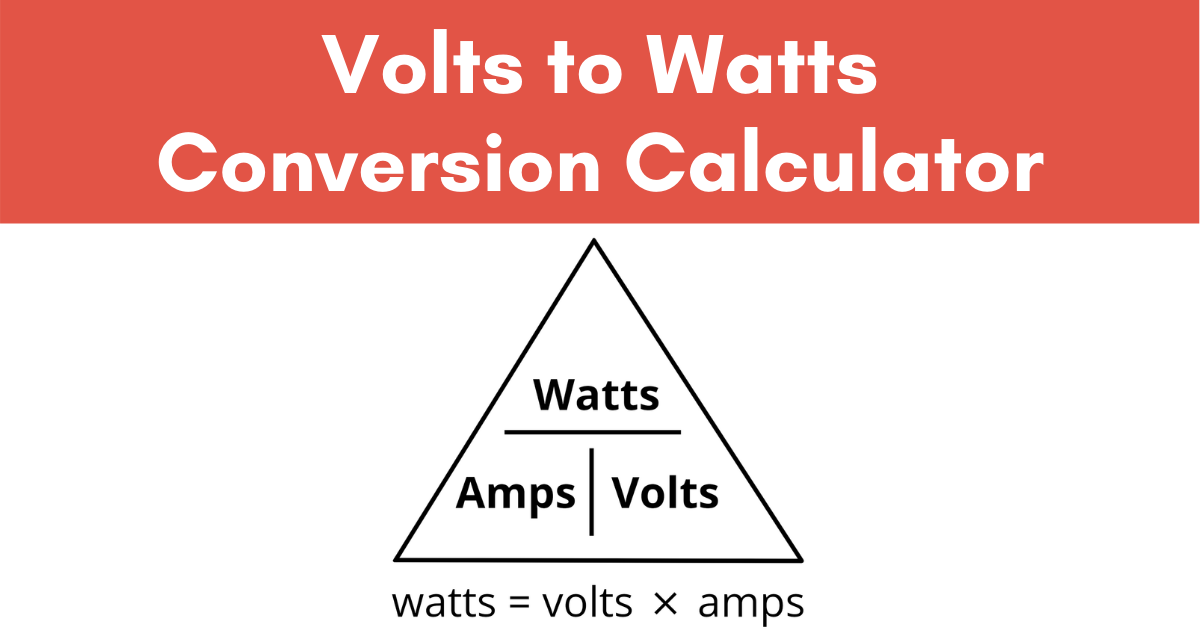
Yes, it's that straightforward! Sometimes you'll see 'P' for power, 'V' for voltage, and 'I' for current (amps). So, P = V × I is your new best friend.
Where to Find the Missing Piece (Amps!)
Alright, so you need Amps. Where do you usually find this elusive number? Most of the time, it's not hiding in plain sight like a treasure map, but rather printed clearly on your devices:
- Device Labels: Check the power brick of your laptop or phone charger, the back of an appliance, or the user manual. You'll often see "Output: 5V --- 2A" (meaning 5 volts and 2 amps).
- Appliance Tags: Larger appliances usually have a sticker somewhere on the back or bottom listing their electrical requirements.
- Spec Sheets: If you're looking at something more advanced like a solar panel or a power supply, the amperage will be listed in its specifications.
Once you have those two numbers, voilà! You can calculate the watts.

Let's Do a Quick Example: Your Phone Charger!
Imagine your phone charger says:
- Output Voltage: 5V (5 Volts)
- Output Current: 2A (2 Amps)
Using our formula: Watts = Volts × Amps
Watts = 5V × 2A

Watts = 10W
So, your phone charger delivers 10 watts of power to your phone. Easy peasy, right? This is why different chargers for different devices have varying "fast charging" capabilities – it's all about delivering more watts!
Practical Power Perks: Why This Knowledge Is Your Superpower
Understanding the relationship between volts, amps, and watts isn't just for bragging rights at your next dinner party (though, go for it!). It gives you real-world superpowers:
- Choosing the Right Charger: Knowing your device's wattage helps you pick compatible chargers and understand why some charge faster than others.
- Power Strip Savvy: Ever wondered if you can plug a toaster and a coffee maker into the same power strip? Knowing their wattage helps you avoid overloading the strip (and tripping a circuit breaker!). Most power strips have a maximum wattage rating.
- DIY Confidence: If you're dabbling in home electronics or off-grid setups, this formula is foundational for selecting the right components and ensuring safety.
- Energy Efficiency: Higher wattage devices generally consume more electricity, meaning a bigger impact on your energy bill. Knowing a device's wattage helps you make informed choices about power usage.
Fun Fact Interlude!
Did you know the "watt" is named after Scottish inventor James Watt, who significantly contributed to the development of the steam engine during the Industrial Revolution? And "volt" honors Italian physicist Alessandro Volta, the inventor of the electric battery. Pretty cool, huh? It's like a little nod to history every time you check your device's specs!
The Grand Finale: Empower Your Everyday
So, converting volts to watts isn't a mystical art; it's a simple algebraic equation that unlocks a deeper understanding of the electric world around us. From ensuring your gadgets charge optimally to making smart decisions about home energy use, this little piece of knowledge is incredibly empowering.
Next time you pick up a new device or eye a new appliance, you won't just see numbers – you'll see power, efficiency, and safety. Go forth, savvy power user, and embrace the watts!