
Ever found yourself staring at a couple of wires, a soldering iron, and a coil of... well, solder, wondering if you’re missing a secret handshake or a magic potion? Maybe you’ve heard whispers of something called "flux." Is it essential? A fancy extra? Or just another thing trying to take up space on your workbench?
Let's unwrap this mystery, shall we? Think of it like baking a cake, but for metal. You wouldn't just throw flour and sugar together without some binding agents, right? Soldering has its own little secrets to success, and flux is often the unsung hero of the story.
What Exactly Are We Trying to Do Here?
When you solder, you're essentially trying to get two pieces of metal to become best friends, permanently joined by a molten metal bridge – the solder. You melt the solder, it flows between the parts, cools down, and boom! A connection. Sounds simple, right?
But here's the rub: metal, much like us on a Monday morning, isn't always perfectly clean and cooperative. It has a habit of getting a tiny, invisible, but mighty layer of gunk on its surface. We're talking about oxidation.
Think of oxidation as the metal's version of dried mud stuck to your boots, or that thin film of grease on a pan. If you tried to glue two greasy surfaces together, what would happen? They'd slide right off, or at best, give you a really weak, disappointing bond. The same goes for solder and oxidized metal. The solder just won't "wet" the surface properly; it beads up like water on a freshly waxed car, refusing to make a proper connection.

Enter Flux: Your Tiny, Mighty Cleaner and Bodyguard!
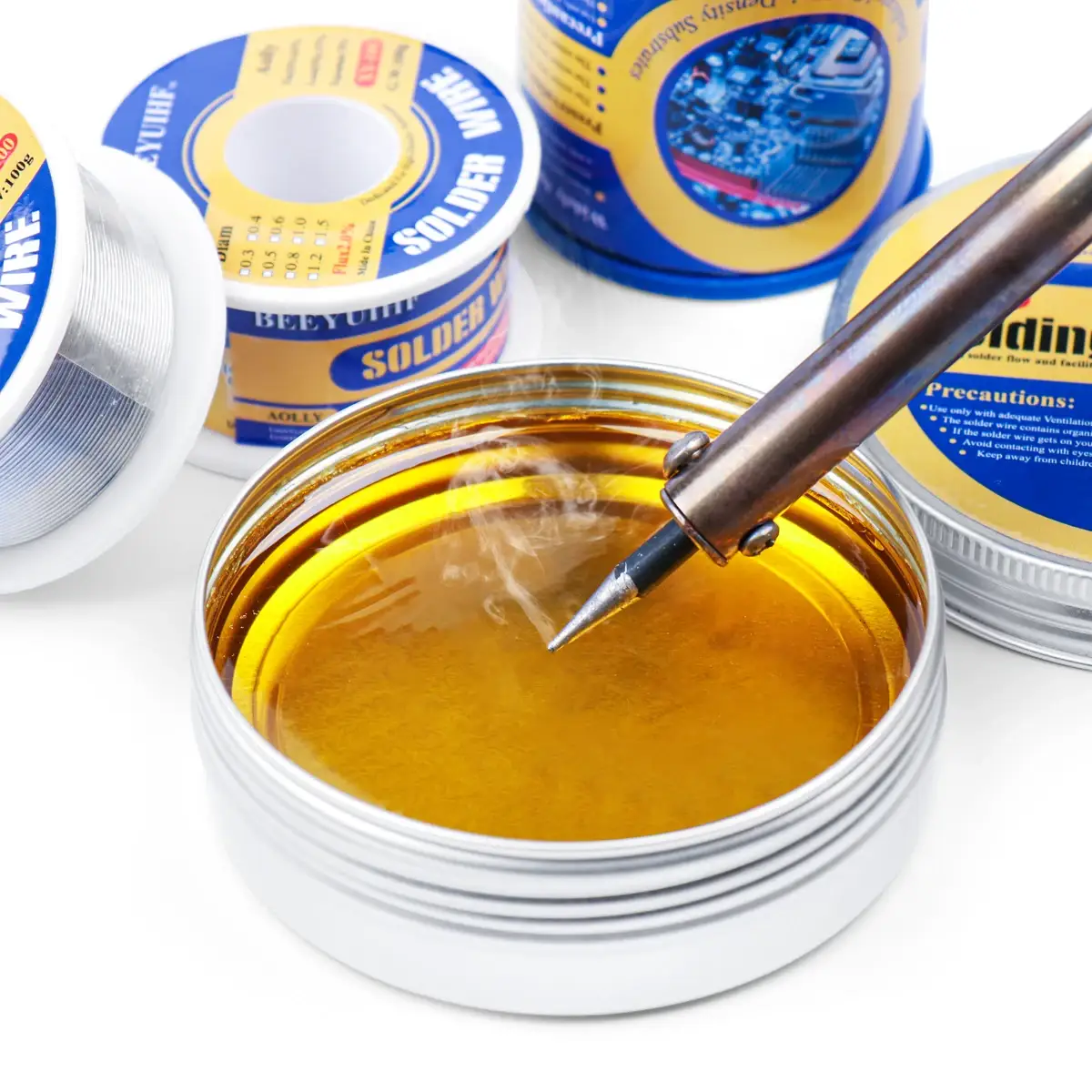
This is where flux rides in on its metaphorical white horse. What does flux do? It’s a chemical cleaning agent that has two superpowers:
- It cleans the metal surface before you even apply the solder, getting rid of that pesky oxidation. It's like giving your metal a little scrub-down so it’s ready to receive its new best friend.
- It then acts as a temporary protective shield, preventing new oxidation from forming while you're heating everything up with your soldering iron. Because as you know, heat can often speed up oxidation. It's like having a tiny, invisible force field around your work area!
So, flux doesn't just clean; it keeps things clean during the process. It allows the molten solder to flow beautifully, spread out, and form a strong, shiny, and reliable joint. Without it, you’re basically trying to glue dirty things together in a dust storm.
Do You Always Need Extra Flux? The "Secret Ingredient"
Okay, here’s a fun secret: a lot of the solder you buy for electronics already has flux built right in! It's called rosin-core solder. Imagine a delicious chocolate bar with a gooey caramel center; that's your solder wire, with a core of flux ready to spring into action as soon as the heat hits it.

For most everyday electronics projects and basic repairs, this built-in flux is usually perfectly sufficient. It's the standard for a reason!
But when might you need to grab that extra bottle or pen of flux?
- When you're working with older, tarnished components that have seen better days. The built-in flux might not be strong enough to cut through years of grime.
- For larger joints, like those found in plumbing or stained glass, where more cleaning power is definitely needed. (Note: These often use different, stronger types of flux than electronics.)
- When you're trying to desolder (remove old solder). A dab of flux can help old, stubborn solder become molten and flow easily again, making removal a breeze.
- If you notice your solder isn't flowing nicely, even with rosin-core. It's often a sign that the metal needs a little extra cleaning love.
What Happens If You Skip the Flux? (The Horror Stories)
Ignoring flux (or not using enough) is like trying to build a sandcastle without water. You'll end up with what we soldering enthusiasts call a "cold joint."
Cold joints are the villains of our story. They look dull, lumpy, and often have a grayish, frosty appearance. Unlike the shiny, smooth, volcano-like shape of a good solder joint, a cold joint is weak, brittle, and notoriously unreliable. It's the difference between a firm handshake and a limp, clammy one.
These poor connections can lead to:
- Intermittent problems: Your device works sometimes, but not always. The ghost in the machine!
- Complete failure: The connection breaks entirely, and your project stops dead in its tracks.
- Frustration: You spend hours troubleshooting, only to find out a tiny, easily preventable problem was the culprit. Nobody wants that!

So, Should You Care About Flux?
Absolutely! Think of flux as your tiny, invisible sidekick, making you a soldering superhero. It’s the secret sauce that takes your soldering from "meh" to "magnificent."
For your average hobbyist, a good quality rosin-core solder will be your best friend. But having a small flux pen or a bottle of liquid rosin flux (for electronics, not acid flux!) on hand is like having a secret weapon for those tricky situations. It’s a small investment that pays off big in stronger, cleaner, and more reliable connections.
So next time you pick up that soldering iron, give a little nod to flux. It's quietly working behind the scenes, ensuring your metal friends stick together through thick and thin, making your projects shine – literally!