Ever dreamt of harnessing the sun's power, picturing sleek solar panels gracing your rooftop, only to have a nagging thought pop up? "But what about that big oak tree in my yard?" or "My neighbor's house casts a shadow for a few hours." It's a common question, and one we hear a lot: Do solar panels actually work in the shade?
Let's bust some myths and shed some light on this sunny topic, shall we? Because, like your favorite indie coffee shop that still serves up a great latte on a cloudy day, solar panels are surprisingly resilient.
The Short Answer: Yes, But It's Complicated (In A Good Way!)
The quick and breezy answer is: yes, solar panels can absolutely work in the shade. However, their efficiency will be reduced. Think of it like trying to get a tan under a beach umbrella – you'll still get some rays, just not as many.
Traditional solar panels are designed to convert sunlight into electricity. When direct sunlight hits them, they're at their happiest and most productive. But even indirect or diffused light (like on a cloudy day or in partial shade) still contains photons that the panels can convert into energy. It's not an all-or-nothing situation.
Understanding The Shade Effect: Not All Shade Is Created Equal
Imagine your solar array as a team of tiny sun-worshippers. If one or two members are partially covered, the whole team can still contribute. The real trick lies in how that shade impacts the system.
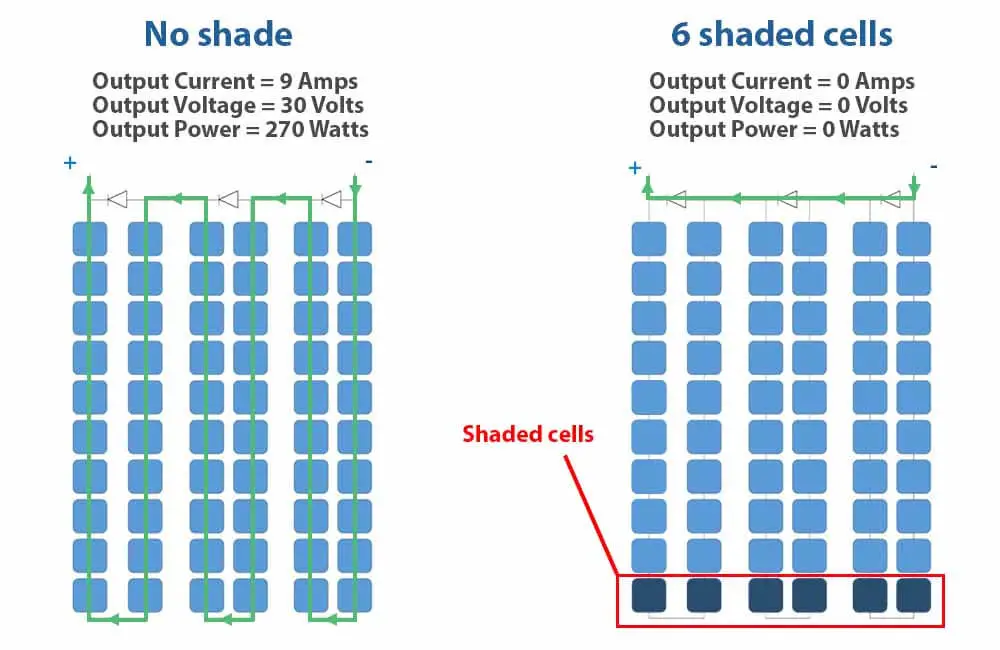
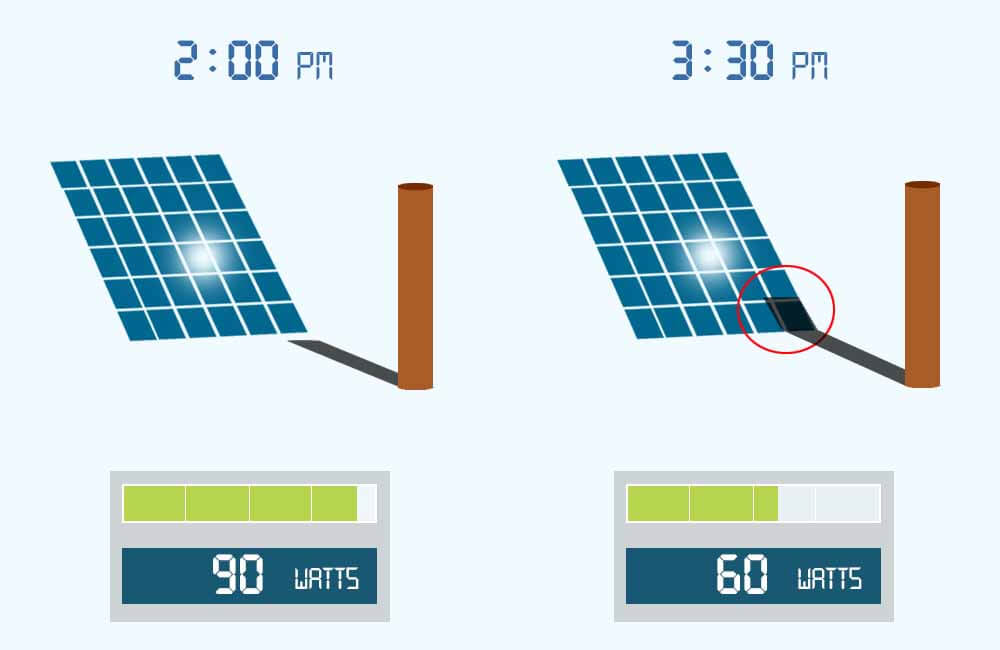
Hard Shade vs. Soft Shade: A tiny, dense shadow from a chimney stack can have a disproportionately larger impact than a sprawling, lighter shadow from a tree with sparse leaves. Why? Because of how panels are wired.
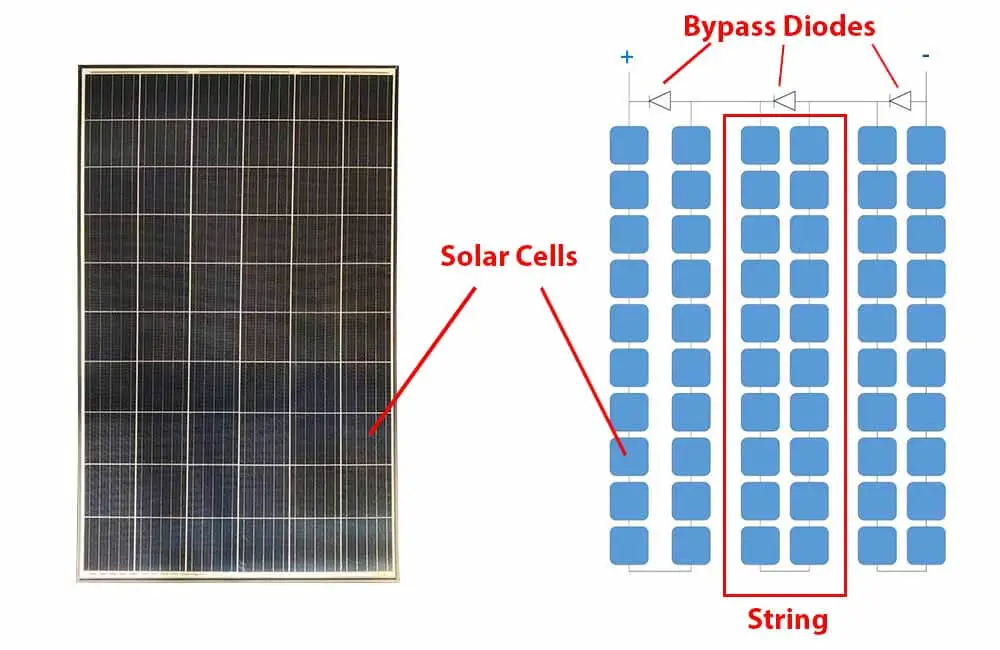
Traditionally, solar panels are wired in "strings." If one panel in a string is heavily shaded, it can act like a bottleneck, reducing the output of the entire string. It's a bit like those old-school Christmas lights where one bulb going out kills the whole strand – frustrating, right?
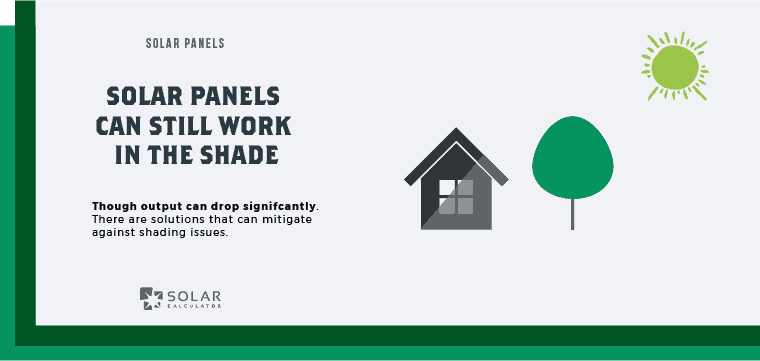
Enter The Game Changers: Microinverters and Power Optimizers
Here's where modern solar technology really shines, even in the shade. The industry has evolved significantly, offering smart solutions that make shade less of a buzzkill.
Microinverters: The Independent Thinkers
Instead of one central inverter for your whole system (like the string system mentioned above), microinverters are installed under each individual solar panel. This means each panel operates independently. If one panel is shaded, it only affects that one panel's output, leaving the others to produce at their maximum potential. It’s like having individually fused bulbs on your Christmas lights – one goes out, the rest stay bright!
This technology is a godsend for homes with unavoidable shade challenges. It ensures you're squeezing every last drop of energy from your sunny panels, even if others are taking a little siesta.
Power Optimizers: The Smart Managers
Power optimizers are another brilliant innovation. They're placed on each panel and work in conjunction with a central inverter. Their job is to condition the electricity coming from each panel, ensuring that even if a panel is shaded, it sends the optimized power to the central inverter. This minimizes the "bottleneck" effect, making your entire system more efficient.
Practical Tips for Shady Situations
So, you've got some shade. Don't throw in the towel on solar just yet!
- Smart Design & Placement: A good solar installer will conduct a thorough shade analysis of your property. They'll use sophisticated software to map out sun paths throughout the year and strategically place panels where they'll get the most sun. Sometimes, moving a panel just a few feet can make a huge difference!
- Trim Those Trees: While we love our leafy friends, sometimes a judicious trim can significantly improve your solar production. A small branch that creates a hard shadow for a couple of hours each day can be surprisingly impactful. Consider seasonal trimming to maximize exposure.
- Monitor Your System: Many modern solar systems come with monitoring apps. This allows you to track your energy production in real-time. You might notice dips during certain times of day or seasons, which can help you identify shade culprits and address them.
- Consider Different Panel Types: Some solar panel technologies, like those made with monocrystalline cells, are known to perform slightly better in lower light conditions than others. Discuss options with your installer.
Fun Fact!
Did you know that the efficiency of solar panels also drops with excessive heat? While full sun is ideal, extremely hot temperatures can actually reduce their output. So, a little shade on a scorching summer day might not be entirely a bad thing!
The Takeaway: Don't Let a Little Shade Cloud Your Solar Dreams
Ultimately, having some shade on your property doesn't automatically disqualify you from going solar. With advancements in technology like microinverters and power optimizers, along with smart design and proactive maintenance, you can absolutely make solar work efficiently for your home.
It's all about making informed choices and working with experts who understand the nuances of solar energy. Embrace the sunny side, even if it's occasionally dappled! By harnessing the sun, you're not just saving money; you're also making a conscious choice for a cleaner, greener planet. And that, my friends, is a feeling that truly shines.