Alright, settle in, grab a virtual coffee, because we're about to dive into one of welding's great "can I just...?" questions: "Can I MIG weld stainless steel?" And the answer, my friend, is a resounding, enthusiastic, yet slightly-complicated "YES! But with caveats. Big, shiny, stainless steel caveats."
You see, most folks, when they think MIG, they think about their trusty old machine that's probably seen more beer spills than actual weld fumes, happily chugging along on mild steel. You grab your standard 75% Argon/25% CO2 (C25) gas, some ER70S-6 wire, and away you go, making sparks and slightly lumpy, yet functional, welds. But stainless? Ah, stainless is a different beast entirely. It’s the fancy, high-maintenance cousin who expects a little more finesse and the right kind of bubbly.
The Great Gas Gaffe: Why Your Standard C25 is a No-Go
This is where most people stumble, and frankly, ruin perfectly good stainless before they even strike an arc. Your beloved C25 gas, that workhorse for mild steel, is like trying to give a gourmet chef a dull butter knife for a delicate operation. It's just not going to cut it. In fact, it's going to actively harm your weld.
Here’s the surprising truth: the CO2 in your C25 gas reacts with the chromium in stainless steel. And guess what chromium does for stainless? It’s the magical ingredient that gives it its corrosion resistance! When CO2 gets involved, it sucks that chromium out of your weld, forming chromium carbides. This process is often called "carbide precipitation" and it leaves your weld joint susceptible to rust. Yes, you heard me right. You can make stainless steel rust! It’s like giving a superhero their kryptonite – totally counter-intuitive and disastrous.
So, what’s the secret sauce for shielding gas? For MIG welding stainless, you generally want something like 98% Argon / 2% CO2. This tiny kiss of CO2 helps with arc stability and bead wet-out, but not enough to cause serious trouble. Some pros even use 90% Helium / 7.5% Argon / 2.5% CO2 for a hotter arc and better penetration, especially on thicker stuff. But for most of us, that 98/2 mix is your golden ticket. And here’s a tip: never use 100% CO2. Your stainless will look at you with disdain, turn purple, and then probably just rust out of spite.
Picking Your Wire: It's Not Just About Sparkles
Okay, gas sorted. Now, let’s talk wire. Just like you wouldn’t put diesel in a petrol car (unless you enjoy expensive tow truck rides), you can’t just throw mild steel wire at stainless. You need stainless steel filler wire that matches your base material.
The most common types you’ll encounter are 308LSi and 316LSi. The 'L' stands for "Low carbon," which is a big deal for preventing that nasty carbide precipitation we just talked about. Less carbon means less opportunity for chromium to go rogue. The 'Si' stands for silicon, which helps with puddle fluidity and cleaning. If you're welding 304 or 304L stainless, 308LSi is usually your go-to. If you're dealing with 316 or 316L (the super corrosion-resistant stuff often found in marine or chemical applications), then 316LSi is your jam.
Think of it like this: your filler metal needs to be compatible with your base metal’s superpowers. Don't cheap out here, or your beautiful, shiny creation will lose its shine, and more importantly, its corrosion resistance, faster than you can say "oxidization." You're building something to last, so give it the right genetic material!

Settings, Technique, and the Art of Not Ruining Things
Once you’ve got the right gas and wire, it's not quite a walk in the park, but it's definitely manageable. Stainless steel is more sensitive to heat than mild steel. Too much heat, and you get that nasty carbide precipitation (again!), distortion, and a discolored, ugly weld. It can also cause a phenomenon called "sugaring" on the backside of the weld, making it look like burnt sugar and severely compromising its corrosion resistance.
Aim for a slightly lower voltage and wire feed speed than you would for mild steel of similar thickness. Keep your travel speed consistent and on the quicker side. You want to be in and out, like a ninja. Also, cleanliness is king! Stainless demands it. Wipe down your material with acetone, brush it with a stainless steel-only wire brush (don't contaminate it with mild steel particles, seriously!), and make sure everything is spotless. Any grease, oil, or rust will turn into ugly porosity and inclusions.
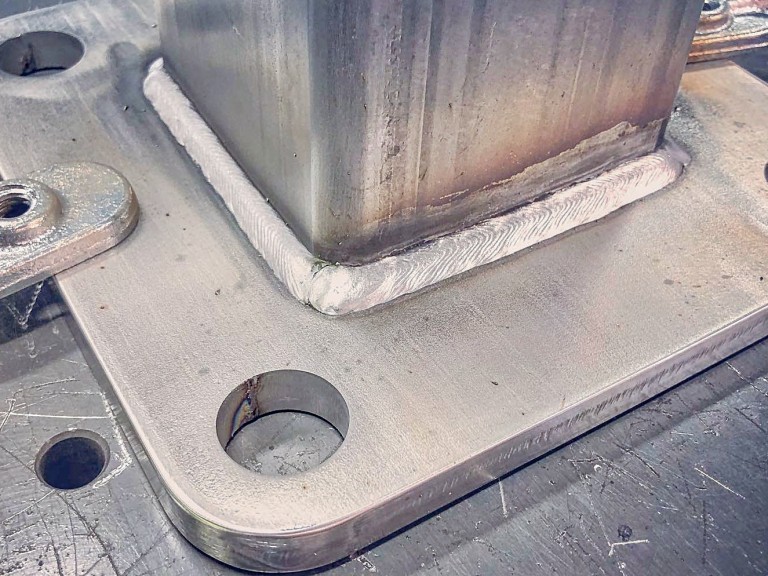
As for technique, a push angle is generally preferred, helping to get better gas coverage and a smoother bead. Don't weave excessively; you're trying to lay down a neat, consistent bead with minimal heat input, not create an abstract art piece with a blowtorch.
So, Is It Worth It?
Absolutely! MIG welding stainless steel, once you understand its quirks, is a fantastic skill to have. It's faster than TIG (though TIG generally produces prettier, more precise welds on thin material), and it's excellent for thicker stainless sections or situations where speed and strength are prioritized over ultimate aesthetics.
It’s not as simple as picking up your mild steel torch and going for gold, but with the right gas, the right wire, and a bit of mindful practice, you’ll be laying down shiny, strong, and corrosion-resistant stainless welds like a pro. Just remember: stainless is a diva; treat it with respect, give it the right environment, and it'll reward you with beautiful, lasting results. Otherwise, prepare for a tantrum of purple discoloration and untimely rust!
