Ever found yourself scrolling through endless feeds, pausing on a random science fact, and thinking, "Wait, what even is that?" Today, we're diving into one of those fascinating head-scratchers: arsenic. Forget the chilling tales from old mystery novels for a moment; we're talking about the element itself. Is it a flashy metal, a quiet nonmetal, or something else entirely? Let's peel back the layers with a smooth, modern vibe.
The Big Reveal: It's a Chameleon!
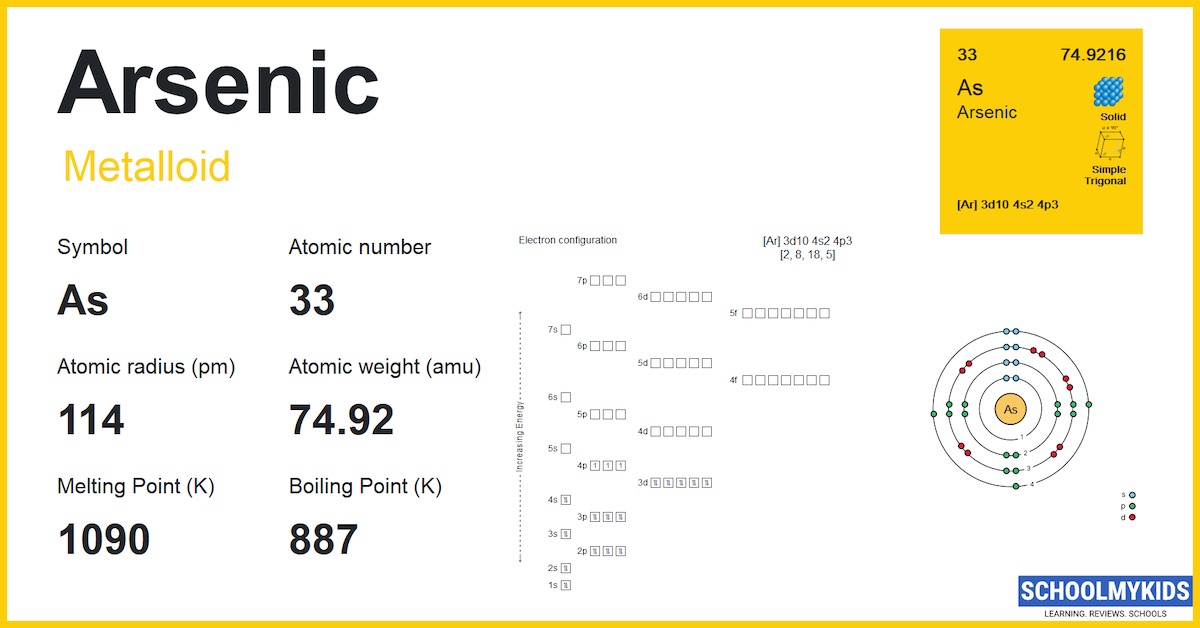
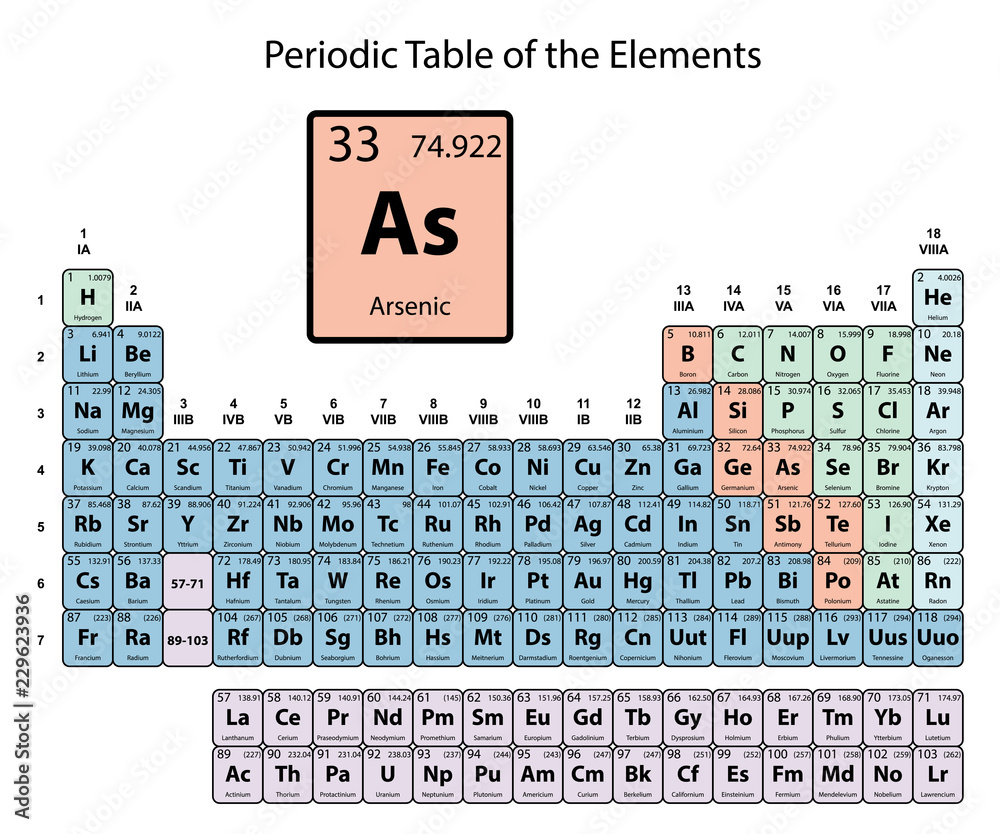
So, metal or nonmetal? Drumroll please... Arsenic is actually a metalloid! Think of it as the ultimate chameleon of the periodic table, straddling the line between the two big categories. It's not quite a full-on metal like shimmering gold or sturdy iron, and it's not a pure nonmetal like airy oxygen or crumbly sulfur. Instead, it gets the best (or maybe the trickiest) of both worlds.
Metalloids are the cool kids who don't fit neatly into a single clique. They exhibit properties that are intermediate between metals and nonmetals. This makes them incredibly versatile and, frankly, super interesting to chemists and engineers alike.
What Makes a Metalloid So Special?
Imagine arsenic walking into a room. Sometimes it acts like a metal: it can conduct electricity, though not as well as, say, copper. Other times, it behaves more like a nonmetal: it's brittle, meaning it shatters rather than bends, and it can form covalent bonds, which are typical of nonmetals.
This dual personality is precisely why arsenic, alongside other metalloids like silicon and germanium, is so valuable in technology. For instance, arsenic is used in certain semiconductors, which are the brains behind our computers, smartphones, and all sorts of modern gadgets. Without these clever elements, your latest tech wouldn't be nearly as smart or efficient!
A Walk Through History (and Some Pop Culture)
Historically, arsenic has had quite a reputation. Yes, it was a preferred poison in many a period drama and Agatha Christie novel – earning it the rather infamous nickname, "the poison of kings and the king of poisons." But its story isn't just about villainy. Ancient Egyptians used it in bronze-making, and historically, arsenic compounds were used in vibrant pigments, such as "Paris Green," a shockingly beautiful (and toxic!) color popular in the 19th century. Imagine beautiful wallpaper secretly packing a punch!
Today, of course, we're much more cautious. While its toxic properties are well-known, understanding its nature as a metalloid helps us comprehend how it behaves in different environments and why it can be both useful and harmful.
Modern Life & Practical Awareness
So, why should you, a modern, busy person, care that arsenic is a metalloid? Well, it ties into a broader awareness about our environment. While you're not likely to encounter arsenic-laden wallpaper anymore, traces of arsenic can naturally occur in groundwater in certain regions. It can also be found in some foods, particularly rice, which absorbs it from the soil more readily than other grains.
The key here isn't panic, but informed awareness. A practical tip? If you have a private well, getting your water tested periodically for various contaminants, including arsenic, is a smart move. For food, a balanced diet is always best. Don't rely on a single food source for all your nutrients, and rinse rice thoroughly before cooking to reduce surface arsenic levels.
It's about being a savvy consumer and a responsible inhabitant of our planet. Knowing that arsenic is a metalloid helps us understand why it might leach into water or be absorbed by plants differently than a purely metallic or nonmetallic element would.
Fun Fact Frenzy!
- Did you know that arsenic occurs naturally in the Earth's crust? It's not just a lab-created villain!
- Some early medicines actually used arsenic compounds, believed to treat conditions like syphilis (though with serious side effects, as you can imagine).
- The word "arsenic" comes from the Greek word "arsenikon," meaning "yellow orpiment," which was a common arsenic sulfide mineral.
A Little Reflection
In our fast-paced world, it's easy to label things as simply "good" or "bad." But as arsenic shows us, reality is often far more nuanced and fascinating. It's a reminder that many things in life, from elements to relationships, exist on a spectrum, blending different qualities. So, next time you hear "arsenic," you'll know it's not just a one-dimensional antagonist, but a complex, boundary-crossing metalloid. Stay curious, stay informed, and embrace the beautiful complexity of the world around you – even down to its chemical core.